
Andrena nivalis
Smith, 1853
Snowy Mining Bee, Snow Miner Bee
Andrena nivalis, commonly known as the snowy mining bee or snow miner , is a solitary mining bee in the Andrenidae. It is native to North America and is active in early spring. Like other Andrena species, it nests in the ground and provisions its with pollen and nectar.
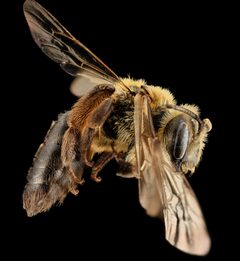
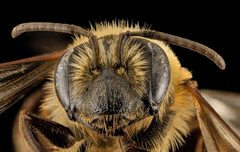
Pronunciation
How to pronounce Andrena nivalis: /ænˈdriːnə nɪˈveɪlɪs/
These audio files are automatically generated. While they are not always 100% accurate, they are a good starting point.
Identification
A. nivalis can be distinguished from other Andrena by its early spring period and association with cooler conditions. Specific morphological characters distinguishing it from similar early-season Andrena species require expert examination.
Images
Habitat
Ground-nesting in soil, with preference for bare or sparsely vegetated ground that receives direct sunlight. Nests in with other individuals of the same .
Distribution
North America. Documented from Vermont and other parts of the United States.
Seasonality
Early spring activity, with emerging and flying during cool conditions when snow may still be present or recently melted.
Life Cycle
Solitary with . Females excavate underground tunnels with multiple , provision each cell with pollen and nectar, lay a single per cell, and seal the cells. Larvae develop underground, pupate, and overwinter as in the nest before emerging the following spring. Males typically emerge before females.
Behavior
Nests in where multiple females utilize suitable patches of bare soil. Females forage for pollen and nectar to provision . Males patrol nesting areas seeking emerging females for mating.
Ecological Role
of early spring-blooming plants. As a ground-nesting , contributes to soil aeration through nesting activities.
Similar Taxa
- Andrena tarsataBoth are mining bees with ground-nesting habits, but A. tarsata is restricted to European heathlands and specializes on Tormentil (Potentilla erecta) pollen.
- Andrena barbilabrisBoth are spring-active Andrena , but A. barbilabris is a European species associated with sandy and has distinct morphological features including prominent facial hairs.
Sources and further reading
- BugGuide
- Wikipedia
- GBIF taxonomy match
- iNaturalist taxon
- NCBI Taxonomy
- Catalogue of Life
- Monarch Starter Set: Partnership Between a Business and the Bohart | Bug Squad
- Not-so Solitary Bees - Buglife Blog - Buglife
- Northern Ireland, invertebrate finds in review 2023 - Buglife Blog - Buglife
- The Alps are home to more than 3,000 lichens | Blog
- In a New Study, Spring Forest Bees Get Their Due
- Bare ground experiments to help save rare bees and wasps - Buglife Blog - Buglife