
Andrena melliventris
Cresson, 1872
Honey-bellied Andrena, Honey-tailed Miner
Andrena melliventris, commonly known as the honey-bellied andrena or honey-tailed miner, is a of mining bee in the Andrenidae. It is a solitary, ground-nesting found in North America and Central America. As with other Andrena species, it excavates tunnels in soil to create nest provisioned with pollen for its larvae. The species was described by Cresson in 1872.
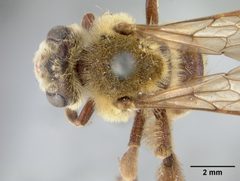
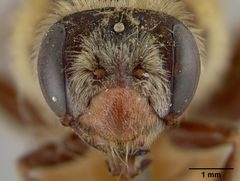

Pronunciation
How to pronounce Andrena melliventris: /ænˈdriːnə mɛˌlɪˈvɛntrɪs/
These audio files are automatically generated. While they are not always 100% accurate, they are a good starting point.
Images
Habitat
Distribution
North America and Central America. GBIF records indicate presence in Middle America and North America.
Behavior
Solitary that excavates underground nesting tunnels. Females provision nest with pollen and nectar for larval development.
Ecological Role
. As a mining bee, it contributes to pollination of wildflowers and potentially agricultural crops in its range.
More Details
Nomenclature Note
The has two commonly used English names: 'honey-bellied andrena' (used in Wikipedia) and 'honey-tailed miner' (preferred on iNaturalist). Both refer to the same species, Andrena melliventris Cresson, 1872.
Data Limitations
Detailed biological information for this specific is sparse in the available sources. Most information must be inferred from general Andrena or related species, and has been marked as per guidelines.
Sources and further reading
- BugGuide
- Wikipedia
- GBIF taxonomy match
- iNaturalist taxon
- NCBI Taxonomy
- Catalogue of Life
- Not-so Solitary Bees - Buglife Blog - Buglife
- Northern Ireland, invertebrate finds in review 2023 - Buglife Blog - Buglife
- In a New Study, Spring Forest Bees Get Their Due
- Bare ground experiments to help save rare bees and wasps - Buglife Blog - Buglife
- What’s in a name….? - Buglife Blog - Buglife
- Bees of the Changing Chalk Partnership Area - Buglife Blog - Buglife