
Andrena frigida
Smith, 1853
Frigid Mining Bee, Cold Miner Bee, Frigid Miner
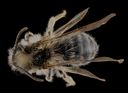
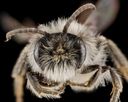
Andrena frigida is a solitary mining bee native to North America, first described by Frederick Smith in 1853. As a member of the Andrenidae, it is a ground-nesting that excavates tunnels in soil to provision with pollen and nectar for its larvae. The species epithet 'frigida' (Latin for 'cold') suggests association with cooler conditions or early-season activity, though specific ecological details remain poorly documented.
Pronunciation
How to pronounce Andrena frigida: //ænˈdriːnə ˈfrɪdʒɪdə//
These audio files are automatically generated. While they are not always 100% accurate, they are a good starting point.
Identification
Andrena frigida can be distinguished from other Andrena through microscopic examination of morphological features, particularly genitalia in males and facial foveae in females. As with most Andrena species, field identification to species level is challenging and typically requires knowledge and reference collections. The Andrena is characterized by velvety patches of hair (foveae) on the of females, and most species have banded .
Images
Habitat
Based on the of the Andrena, A. frigida likely nests in bare or sparsely vegetated ground with well-drained soils. Mining bees generally require exposed soil surfaces for nest excavation and prefer sunny, south-facing slopes. Specific associations for this have not been documented.
Distribution
Recorded from North America, with confirmed observations from Vermont and broader distribution across the continent. The exact range boundaries remain poorly defined due to limited survey effort and taxonomic challenges.
Life Cycle
As a solitary , Andrena frigida has a typical of the : females excavate individual nest burrows in soil, construct provisioned with pollen and nectar, lay , and seal cells. Larvae develop underground, pupate, and emerge as the following season. Males typically emerge before females.
Behavior
Females are solitary nesters, each constructing and provisioning her own burrow without cooperative . Males patrol nesting areas seeking mates. Like other Andrena , individuals likely forage within limited distances from nests.
Ecological Role
As a , Andrena frigida contributes to pollen transfer for flowering plants within its range. The specific plant associations remain undocumented. As a ground-nesting , it also contributes to soil aeration through burrowing activity.
Similar Taxa
- Andrena carliniAnother North American Andrena with similar size and general appearance; distinguished by subtle morphological differences in facial foveae and genitalia structure.
- Andrena barbilabrisShares ground-nesting and general ; A. barbilabris is specifically associated with sandy and has distinctive hair characteristics on the .
More Details
Taxonomic History
Described by British entomologist Frederick Smith in 1853, the has received limited modern taxonomic revision. The specific epithet 'frigida' may refer to northern distribution, cool-season activity, or simply be a Latin descriptor without direct ecological meaning.
Data Limitations
Despite over 1,300 iNaturalist observations, peer-reviewed ecological studies of Andrena frigida are absent from available literature. Most biological information must be inferred from -level characteristics, which may not accurately reflect this ' specific requirements.
Sources and further reading
- BugGuide
- Wikipedia
- GBIF taxonomy match
- iNaturalist taxon
- NCBI Taxonomy
- Catalogue of Life
- Grasshoppers of Colorado
- Grasshoppers of Colorado
- Not-so Solitary Bees - Buglife Blog - Buglife
- Northern Ireland, invertebrate finds in review 2023 - Buglife Blog - Buglife
- In a New Study, Spring Forest Bees Get Their Due
- Bare ground experiments to help save rare bees and wasps - Buglife Blog - Buglife