
Syntexis libocedrii
Rohwer, 1915
incense-cedar wood wasp, cedar wood wasp
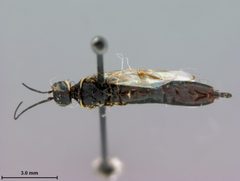
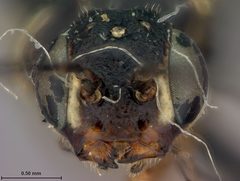
Syntexis libocedrii is the sole extant representative of the Anaxyelidae, a lineage with an extensive Mesozoic fossil record that makes this a 'living fossil.' It exhibits a highly specialized reproductive strategy, ovipositing exclusively in wood of recently burned conifers including incense-cedar (Calocedrus), red cedar (Thuja), and juniper (Juniperus). The species is rarely encountered due to its cryptic habits and dependence on post-fire environments.

Pronunciation
How to pronounce Syntexis libocedrii: /sɪnˈtɛksɪs ˌlaɪboʊˈsiːdraɪ/
These audio files are automatically generated. While they are not always 100% accurate, they are a good starting point.
Identification
Distinguished from other wood wasps by its status as the only living member of Anaxyelidae; morphological separation from fossil relatives requires examination. Distinguished from Siricidae and other symphytan by family-level characters including wing venation and genitalia structure. The combination of association with freshly burned conifer wood and geographic range may aid field recognition.
Images
Habitat
Post-fire coniferous forests; specifically areas containing recently burned incense-cedar, red cedar, or juniper. The requires wood that is often still smoldering during oviposition.
Distribution
Mountains of central California to southern British Columbia.
Host Associations
- Calocedrus - oviposition substrateincense-cedar
- Thuja - oviposition substratered cedar
- Juniperus - oviposition substratejuniper
Life Cycle
are laid in recently burned conifer wood; larvae develop within the wood. Specific details of larval development, , and timing are not documented.
Behavior
Females oviposit in wood that is often still smoldering from recent fire. are very rarely observed except by firefighters working in burned areas.
Ecological Role
Specialized colonizer of post-fire conifer wood; larval development in burned timber suggests a role in early successional decomposition processes in fire-affected forests.
Human Relevance
Rarely encountered by the general public; known primarily from observations by firefighters in burned forest areas. No documented economic or medical significance.