
Anaxyelidae
incense cedar wood wasps
Genus Guides
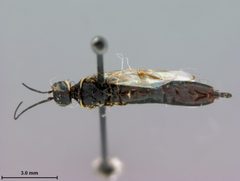
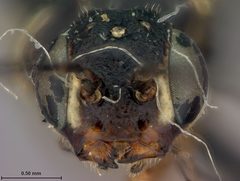
1- Syntexis(cedar wood wasp)
is a relict of siricoid wood wasps (Hymenoptera: ) represented today by a single extant , Syntexis libocedrii, in western North America. The family was highly diverse during the Mesozoic, with over two dozen extinct and more than 50 fossil species documented from Jurassic and Cretaceous deposits across Asia, Europe, and North America. The family comprises two : Anaxyelinae, which dominated the Jurassic, and Syntexinae, which prevailed in the Cretaceous and survives today.

Pronunciation
How to pronounce Anaxyelidae: //ˌæn.ækˈsɪl.ɪˌdiː//
These audio files are automatically generated. While they are not always 100% accurate, they are a good starting point.
Identification
The single extant Syntexis can be distinguished from other siricoid wood wasps by its association with fire-damaged conifers. Fossil genera are distinguished by wing venation characters, including the combination of two mesotibial spurs, forewing 1Rs to 1M length ratio less than 1, forewing 1mcu length-to-width ratio of 2 or greater, and presence of 2M+Cu in the hind wing.
Images
Habitat
The extant Syntexis libocedrii inhabits coniferous forests, specifically targeting recently burnt or fire-damaged conifers for oviposition. Fossil species are known from lacustrine deposits including the Karabastau Formation (Kazakhstan), Daohugou (China), and Burmese amber (Myanmar), indicating diverse Mesozoic .
Distribution
Extant: western North America. Fossil: widespread Mesozoic distribution including the Middle Jurassic of China (Daohugou), Late Jurassic of Kazakhstan (Karabastau Formation), Early Cretaceous of Spain (La Pedrera de Rubies Formation), Russia (Zaza Formation, Turga Formation), and the United Kingdom (Purbeck Group), and mid-Cretaceous of Myanmar (Burmese amber).
Host Associations
- conifers - oviposition substrateextant Syntexis libocedrii lays in sapwood of fire-damaged conifers; fossil associations unknown
Ecological Role
As siricoid wood wasps, likely contributed to wood decomposition in Mesozoic forests. The was among the most diverse hymenopteran groups during the Late Mesozoic, with 22 documented from Karatau alone, indicating substantial ecological importance in Jurassic lacustrine .
Similar Taxa
- Siricidaeboth are of wood wasps in the superfamily ; is distinguished by its relict status, single extant , and association with fire-damaged wood
- Xiphydriidaeanother siricoid ; differs in wing venation and the unique ecological specialization of its extant representative
Sources and further reading
- BugGuide
- Wikipedia
- GBIF taxonomy match
- iNaturalist taxon
- NCBI Taxonomy
- Catalogue of Life
- A new genus of anaxyelid wood wasps from the mid-Cretaceous and the phylogeny of Anaxyelidae (Hymenoptera)
- A New Species of Orthosyntexis (Hymenoptera: Anaxyelidae) from Mid-Cretaceous Burmese Amber.
- Anaxyelidae of Karatau: 100 Years After.