
Leuronota
Crawford, 1914
Species Guides
3- Leuronota fagarae(Wild Lime Psyllid)
- Leuronota maculata
- Leuronota maritima
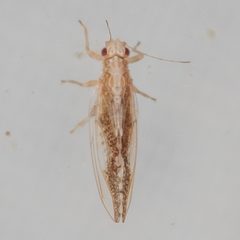
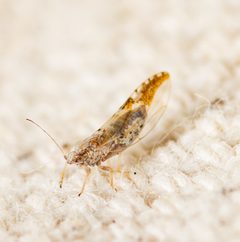
Leuronota is a of psyllids (Hemiptera: Triozidae) established by Crawford in 1914. The genus includes at least two described : Leuronota fagarae, an in Florida that feeds on wild lime (Zanthoxylum fagara) and is closely related to the economically important Diaphorina citri; and L. calycophylli, described from Peru as a pest on the timber tree Calycophyllum spruceanum (Rubiaceae). Members of this genus exhibit unusual associations, including the rare occurrence of rubiaceous hosts in psylloids.
Pronunciation
How to pronounce Leuronota: //lɛʊroʊˈnoʊtə//
These audio files are automatically generated. While they are not always 100% accurate, they are a good starting point.
Images
Habitat
Experimental timber plantations (L. calycophylli in Peru); transition zones between non-cultivated areas and cultivated citrus in Florida (L. fagarae)
Distribution
Native to South America (Paraguay for L. fagarae; Peru for L. calycophylli); in Florida, USA (L. fagarae first reported 2001)
Diet
Phloem sap-feeding on plants
Host Associations
- Zanthoxylum fagara - primary plant for feeding and (L. fagarae)wild lime, a citrus relative in Rutaceae
- Zanthoxylum clava-herculis - plant (L. fagarae)
- Citrus spp. - suitability demonstrated (L. fagarae)
- Calycophyllum spruceanum - plant (L. calycophylli)timber in Rubiaceae; unusual for psylloids
- Wolbachia endosymbiont (strain wLfag-FL) - intracellular bacterial endosymbiontsupergroup B; 1,359 identified with metabolic and secretion system functions
Life Cycle
Nymphs develop within rolled leaf edges on plant, which provide physical protection
Behavior
Produces rolled leaf edges as feeding damage phenotype; feed and reproduce on plants
Human Relevance
Research interest due to close phylogenetic relationship with Diaphorina citri, the of Huanglongbing (HLB), a devastating citrus ; potential to inform pest control strategies and therapeutic molecule discovery
Similar Taxa
- Diaphorina citriClose phylogenetic relationship; both are psyllids in Triozidae with similar and , but D. citri is the established of HLB while L. fagarae feeds on related Rutaceae
- Other Leuronota congenersL. calycophylli differs from other Leuronota in absence of genal processes and distinctive genitalia structure; L. fagarae can be distinguished by association with Zanthoxylum and presence in Florida
Sources and further reading
- BugGuide
- GBIF taxonomy match
- iNaturalist taxon
- NCBI Taxonomy
- Catalogue of Life
- Transcriptomic characterization of Wolbachia endosymbiont from Leuronota fagarae (Hemiptera: Psylloidae)
- Host Suitability of Citrus andZanthoxylumSpp. forLeuronota fagaraeBurckhardt andDiaphorina citriKuwayama (Hemiptera: Psylloidea)
- The plant-louseLeuronota calycophyllisp. n. (Homoptera, Psylloidea), a pest on the timber speciesCalycophyllum spruceanum(Rubiaceae) in Peru