
Cryptococcus
Vuill., 1901
Species Guides
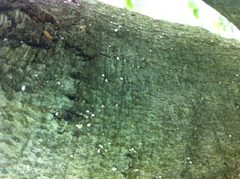
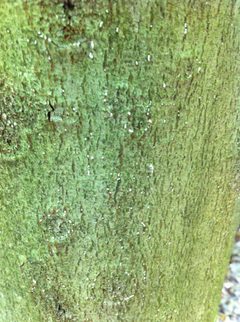
1- Cryptococcus fagisuga(beech scale)
Cryptococcus is a of basidiomycete fungi in the Cryptococcaceae, encompassing both yeast and filamentous forms. The genus includes medically significant such as C. neoformans and C. gattii, which cause cryptococcosis, a potentially fatal mycosis particularly affecting immunocompromised individuals. Species exhibit dimorphism, existing as encapsulated yeasts in environmental and clinical settings, with producing basidiospores via club-shaped basidia. The polysaccharide capsule, particularly glucuronoxylomannan (GXM), serves as the primary factor in pathogenic species.
Pronunciation
How to pronounce Cryptococcus: //ˌkrɪp.toʊˈkɒkəs//
These audio files are automatically generated. While they are not always 100% accurate, they are a good starting point.
Images
Habitat
Soil contaminated with avian guano, particularly pigeon droppings; decaying organic matter; trees and decaying wood; some are parasitic on other fungi
Distribution
; C. neoformans is globally distributed, C. gattii is to tropical Africa and Australia but has expanded to temperate regions including North America
Life Cycle
Dimorphic with yeast phase in environment and ; occurs when compatible mating types (MATa and MATα) encounter, producing basidiospores on elongated, club-shaped basidia; some teleomorph are homothallic and self-fertile
Ecological Role
Decomposer in nitrogen-rich environments; opportunistic when inhaled; some serve as agents for postharvest fungal of fruits and vegetables
Human Relevance
Major cause of cryptococcal meningitis and meningoencephalitis, particularly in HIV/AIDS patients; responsible for approximately 15% of AIDS-related deaths worldwide; transmission occurs via inhalation of airborne yeast from environmental sources; C. neoformans and C. gattii are the primary pathogenic , with C. laurentii and other non-neoformans species increasingly reported in clinical
Sources and further reading
- BugGuide
- Wikipedia
- iNaturalist taxon
- NCBI Taxonomy
- Catalogue of Life
- Nasty scale insects spell trouble for American beech trees: Beech bark scale, Cryptococcus fagisuga — Bug of the Week
- Archive — Bug of the Week
- Ecology ofCryptococcus neoformans
- Population Structure and Ecology ofCryptococcus neoformansandCryptococcus gattii
- Cryptococcus laurentii (Non Cryptococcus neoformans/gatti) infections – Immunocompromised or Immunocompetent -Who is at risk? – Systematic review
- Avaliação da atividade antifúngica de naftoquinonas isoladas e combinadas com anfotericina B contra cepas do complexo Cryptococcus neoformans E Cryptococcus gattii
- Meningoencefalomielite por Cryptococcus spp. em felino Meningoencephalomyelitis caused by Cryptococcus spp. in a feline Meningoencefalomielitis por Cryptococcus spp. en felino
- Molecular Architecture of Cryptococcus Cell Walls Reveals Species-Specific Chitosan-Dependent Remodeling.