
Milviscutulus
Williams & Watson, 1990
mango shield scale
Species Guides
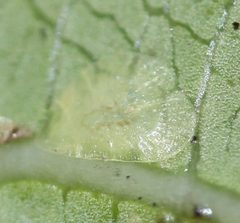
1- Milviscutulus mangiferae(Mango Shield Scale)
Milviscutulus is a of soft scale insects ( Coccidae) established by Williams & Watson in 1990. The genus contains at least one economically significant , M. mangiferae, commonly known as the mango shield . Species in this genus are phloem-feeding herbivores associated with mango (Mangifera indica). The genus has been documented in Egypt, Australia (north Queensland), and Papua New Guinea.
Pronunciation
How to pronounce Milviscutulus: //mɪl.vɪs.kjuːˈtuː.ləs//
These audio files are automatically generated. While they are not always 100% accurate, they are a good starting point.
Identification
Members of this can be distinguished from other Coccidae by their association with mango and shield-like covering. Specific morphological diagnostic features for the genus require examination of female specimens under microscopy; detailed morphological characters are not provided in available sources.
Images
Habitat
Private mango orchards; occurs on mango foliage and stems.
Distribution
Documented from Ismailia Governorate, Egypt; north Queensland, Australia; and parts of Papua New Guinea.
Seasonality
Year-round activity with three seasonal peaks: January, June/July, and November (based on Egyptian data).
Diet
Phloem-feeding on mango (Mangifera indica).
Host Associations
- Mangifera indica - primary Ewaise variety highly susceptible; Zebda and Fagri Kalan varieties susceptible; Balady and Sakary varieties relatively .
Behavior
Kin-biased : related individuals exhibit non-random dispersal patterns resulting in spatial association of kin. varies significantly by variety.
Ecological Role
Agricultural pest requiring strategies.
Human Relevance
Economic pest of mango production; preference studies inform variety selection for resistance breeding and orchard management.
Similar Taxa
- Other Coccidae generaDistinguished by specificity to mango and documented geographic distribution; precise morphological separation requires expert examination.
Sources and further reading
- BugGuide
- GBIF taxonomy match
- iNaturalist taxon
- NCBI Taxonomy
- Catalogue of Life
- Kin-biased dispersal behaviour in the mango shield scale, Milviscutulus mangiferae
- Host preference of certain mango varieties to infestation with the mango shield scale, Milviscutulus mangiferae (Green) (Hemiptera: Coccidae) in Ismailia governorate, Egypt
- New records of mango shield scale Milviscutulus mangiferae (Green) (Hemiptera: Coccidae) and Brevennia rehi (Lindinger) (Hemiptera: Pseudococcidae) in north Queensland
- Pest categorisation of Milviscutulus mangiferae.