
Coccus longulus
(Douglas, 1887)
Long Brown Scale
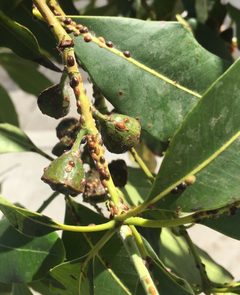
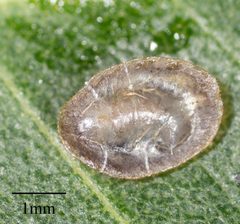
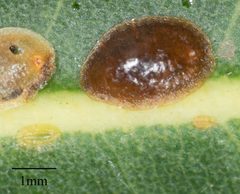
Coccus longulus, commonly known as the long brown , is a soft scale insect in the Coccidae. It has a broad global distribution spanning Europe, Africa, Asia, the Americas, and numerous Pacific islands. As a member of the soft scales, it likely feeds on plant sap and may produce honeydew, though specific biological details remain poorly documented in accessible literature.
Pronunciation
How to pronounce Coccus longulus: /ˈkɒk.kəs ˈlɒŋ.ɡjuː.ləs/
These audio files are automatically generated. While they are not always 100% accurate, they are a good starting point.
Images
Distribution
Documented across six continents and numerous island systems. Records include: Europe (United Kingdom, Netherlands, Germany, France, Cyprus, Canary Islands); Africa (Senegal, South Africa, Uganda, Zimbabwe, Angola, Madagascar, Mauritius, Seychelles, Sao Tome and Principe, Agalega Islands); Asia (Saudi Arabia, Thailand, Taiwan, Sri Lanka, Japan, Israel, Indonesia, India, Lebanon, China); Oceania (Australia, New Zealand, Fiji, New Caledonia, Palau, Northern Mariana Islands, Marshall Islands, Federated States of Micronesia, Tonga, Western Samoa, Vanuatu, Cook Islands, Kiribati, French Polynesia, Hawaiian Islands, Guam, Bonin Islands, Papua New Guinea, Solomon Islands); Americas (United States, Mexico, Panama, Colombia, Ecuador, Honduras, Puerto Rico, U.S. Virgin Islands, Bermuda, Cuba); and the Galápagos Islands.
More Details
Taxonomic Note
Originally described as Lecanium longulum by Douglas in 1887 before transfer to the Coccus.