
Asterolecaniidae
Cockerell, 1896
pit scales, asterolecaniids
Genus Guides
1- Russellaspis(oleander pit scale)
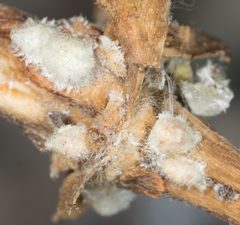
is a of scale insects commonly known as pit . They are characterized by inducing depressions or pits in plant tissues, often causing shoot distortion. The family contains approximately 25 and 243 described , with greatest diversity in the northern hemisphere. Many species are associated with oaks, bamboos, and ornamental plants, and some form galls.
Pronunciation
How to pronounce Asterolecaniidae: //ˌæstɛroʊlɛˈkeɪni.aɪdiː//
These audio files are automatically generated. While they are not always 100% accurate, they are a good starting point.
Identification
Pit can be recognized by the characteristic depressions they create in plant tissues. females typically possess a clear or transparent test (protective covering). The includes gall-inducing that cause distinct plant deformations. Specific identification to or species requires examination of morphological features of the adult female and knowledge of host plant associations.
Images
Habitat
Found on leaves and shoots of plants, particularly on angiosperm trees and shrubs. Some inhabit specialized structures such as galleries.
Distribution
Occurs in most regions of the world with highest abundance in the northern hemisphere. Documented from Asia (China, India, Vietnam, Laos, Thailand, Indonesia, Japan), Africa (South Africa), Australia (all states including Tasmania), New Zealand, Europe (Denmark, Norway, Sweden), the Americas (Cuba, United States), and Jamaica.
Diet
Obligate phytophages on angiosperm plants.
Host Associations
- Quercus - primary especially common on oaks
- Bambusoideae - primary especially common on bamboos
- Eucalyptus -
- Leptospermum - of gall-forming Callococcus leptospermi
- ornamental plants - frequently found on various ornamental
- Formicidae - some live in with ants that transport instars within galleries
Life Cycle
Females have three instars; males have five instars. Several are , with developing inside the maternal body and embryos at various stages found within dissected females. Embryonic development occurs under the female's test, which forms a cavity as the female dies and shrinks. Second instar larvae may disperse from parent galls to establish new feeding sites.
Behavior
Some exhibit complete ovoviviparity. occurs through of second instar larvae. In species with associations, ants transport different instars within hidden underground galleries. Females and males may live separately on different parts of the plant or on different plants.
Ecological Role
Phytophagous herbivores that induce plant tissue modifications including pits, depressions, and galls. Some maintain mutualistic relationships with ants. Serve as for including Aphytis (Hymenoptera: Aphelinidae).
Human Relevance
Some are intercepted as pests at international ports of entry. Palmaspis species have been detected in passenger luggage. The 's association with ornamental plants creates potential for introduction to new regions.
Similar Taxa
- DiaspididaeBoth are of scale insects with protective coverings; can be distinguished by the pit-forming habit and typically transparent test, whereas Diaspididae usually have a more opaque, separable armor
- CoccidaeBoth are soft ; differ in inducing distinct tissue depressions rather than general feeding damage and typically possess a more reduced waxy covering
Sources and further reading
- BugGuide
- Wikipedia
- GBIF taxonomy match
- iNaturalist taxon
- NCBI Taxonomy
- Catalogue of Life
- Video Shows U.S. Customs Agents Screening for Invasive Insect Pests
- Distribution and Known Host Records for Planchonia stentae (Hemiptera: Coccoidea: Asterolecaniidae)
- First illustration of chromosomes and genetic system of Lecanodiaspidinae (Homoptera, Coccinea, Asterolecaniidae s.l.)
- New Asterolecaniidae s.l. (Homoptera: Coccinea) from different regions of the world and some distributional records
- New Asterolecaniidae s.l. (Homoptera: Coccinea) from different regions of the world and some distributional records
- Descriptions of all the female developmental stages of Endernia despoliata Danzig, a gall-inducing pit scale (Hemiptera: Coccomorpha: Asterolecaniidae)
- THE IMMATURE AND ADULT STAGES OF CALLOCOCCUS LEPTOSPERMI (MASKELL) (HOMOPTERA: COCCOIDEA: ASTEROLECANIIDAE), WITH OBSERVATIONS ON LIFE HISTORY
- A new scale insect host family (Hemiptera: Asterolecaniidae) for Aphytis (Hymenoptera: Aphelinidae) in China