
Mordwilkoja
Del Guercio, 1909
Species Guides
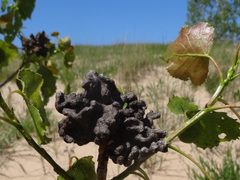
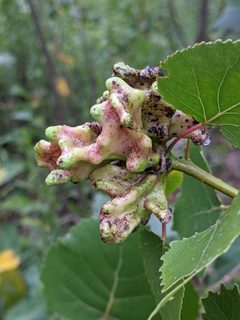
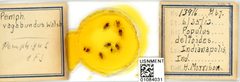
1- Mordwilkoja vagabunda(Poplar Vagabond Aphid)
Pronunciation
How to pronounce Mordwilkoja: //mɔrˈdwilkɔja//
These audio files are automatically generated. While they are not always 100% accurate, they are a good starting point.
Identification
Images
Distribution
Vermont, United States; additional records from the United States (general).
Seasonality
Activity observed in July in Ithaca, New York.
Diet
Phloem-feeding on plants; specific dietary details at level unknown.
Host Associations
- Populus deltoides - gall Confirmed for M. vagabunda; gall development occurs on this .
Life Cycle
Gall-forming with nymphal stages developing within plant galls; specific details at level not established.
Behavior
Nymphs exhibit antipredator defensive including synchronized, rhythmic leg movements and collective twitching. When attacked by such as pyralid larvae, nymphs use legs to claw while pressing rostra against the attacker, possibly to pierce the . These behaviors may represent altruistic fortress defense strategies that maximize inclusive of the .
Ecological Role
Gall-forming herbivore that induces plant tissue modifications; defensive suggest potential role in protecting colony reproductive output from .
Similar Taxa
- PemphigusBoth are gall-forming aphids in tribe Pemphigini, but Pemphigus possess specialized first-instar soldier nymphs for defense, whereas Mordwilkoja uses alatoid nymphs of all instars.
- Aphis neriiBoth exhibit synchronized, rhythmic defensive movements against , though Aphis nerii is not a gall-former and belongs to a different lineage.
Sources and further reading
- BugGuide
- GBIF taxonomy match
- iNaturalist taxon
- NCBI Taxonomy
- Catalogue of Life
- A Chapter in the Life History of Mordwilkoja Vagabundus (Aphididæ)
- Life History and Gall Development of Mordwilkoja vagabunda (Homoptera: Aphidae) on Populus deltoides1
- First record of antipredator behavior in the gall‐forming aphid Mordwilkoja vagabunda
- First record of anti-predator behavior in the gall-forming aphid Mordwilkoja vagabunda
- Life History and Gall Development of Mordwilkoja vagabunda (Homoptera: Aphidae) on Populus deltoides. Part II—Gall Development1