
Neosymydobius paucisetosus
Quednau, 1994
Red-headed Brown Oak Aphid
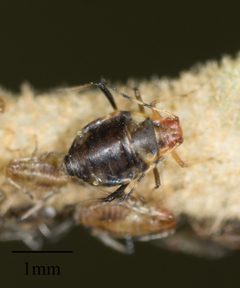
Neosymydobius paucisetosus is a of in the Aphididae, described by Quednau in 1994. It belongs to the Neosymydobius, a group associated with oak-feeding aphids in the tribe Myzocallidini. The species is known from very few observations, with limited documented information about its and .
Pronunciation
How to pronounce Neosymydobius paucisetosus: /niːoʊˌsɪmiˈdoʊbiəs ˌpɔːsɪˈsɛtoʊsəs/
These audio files are automatically generated. While they are not always 100% accurate, they are a good starting point.
Identification
Members of the Neosymydobius are distinguished from related oak-feeding aphids by specific morphological features of the siphunculi and cauda. The specific epithet 'paucisetosus' (meaning 'few bristles') suggests reduced setation compared to . Positive identification requires examination of slide-mounted specimens by a .
Images
Habitat
Associated with oak (Quercus) plants, as is characteristic for the Neosymydobius and tribe Myzocallidini.
Distribution
Known from North America; specific locality data is sparse due to limited collection records.
Diet
Feeds on oak (Quercus spp.), based on -level association.
Host Associations
- Quercus - plant-level association; specific oak unknown
Ecological Role
Functions as a phloem-feeding herbivore on oak trees, potentially contributing to nutrient cycling and serving as prey for natural enemies.
Human Relevance
No documented economic or agricultural significance; of interest primarily to taxonomists and oak researchers.
Similar Taxa
- Neosymydobius albusCongeneric with overlapping oak range; distinguished by setal counts and siphuncular
- Myzocallis spp.Related in tribe Myzocallidini with similar oak-feeding habits; Neosymydobius differs in antennal and abdominal structure
More Details
Taxonomic history
Described by Quednau in 1994, this remains poorly known with only two observations documented in iNaturalist as of the knowledge cutoff.