
Stenomacra
Stål, 1870
bordered plant bugs
Species Guides
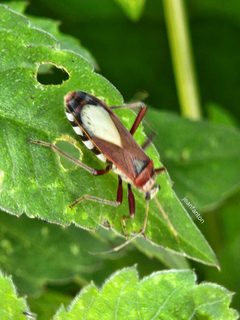
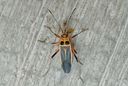
1- Stenomacra marginella(bordered plant bug)
Stenomacra is a of bordered plant bugs in the Largidae, established by Stål in 1870. The genus contains at least eight described distributed primarily in the Americas, with records from the southwestern United States through Central America to South America, including Ecuador and Panama. Species in this genus are associated with vegetation, particularly flowering plants, and have been observed feeding on plant sap and honeydew. Some species have been studied for their mating and ecological roles in agroecosystems.

Pronunciation
How to pronounce Stenomacra: /ˌste.noʊˈmæk.rə/
These audio files are automatically generated. While they are not always 100% accurate, they are a good starting point.
Images
Habitat
in this occupy diverse ranging from arid grasslands to riparian zones and inter-Andean valleys. Stenomacra marginella has been documented in extreme abundance on the foliage, stems, and flowers of Seep Willow (Baccharis salicifolia) in riparian habitats in New Mexico, and associated with Mexican sunflower (Tithonia diversifolia) in Panama. Stenomacra tungurahuana occurs on the northeastern slopes of the Eastern Cordillera of the Andes in Ecuador.
Distribution
North, Central, and South America. Stenomacra marginella: southwestern United States (New Mexico), Mexico, Panama. Stenomacra tungurahuana: Ecuador (inter-Andean valley, type locality Baños; northeastern slopes of Eastern Cordillera, San Isidro Lodge, Napo province). Other occur in Central and South America.
Diet
Phytophagous. Stenomacra marginella has been observed feeding on plant sap and honeydew. The has been referred to as in literature, though this characterization lacks detailed documentation.
Host Associations
- Baccharis salicifolia - and food sourceSeep Willow; extreme abundance of Stenomacra marginella recorded on foliage, stems, and flowers in New Mexico
- Tithonia diversifolia - associated plantMexican sunflower; predominant insect observed on this plant in Cerro Punta, Chiriquí, Panama
Behavior
Mating has been experimentally studied in Stenomacra marginella, with research examining male behavior during copulation and its effects on copula duration, female remating, and oviposition.
Ecological Role
Stenomacra marginella has been proposed as a stabilizer of agroecosystems, potentially serving as alternative prey for and , and possibly acting as a pest predator. The serves as for parasitoids in Mexico.
Similar Taxa
- Other Largidae genera-level similarity in general body plan as bordered plant bugs; Stenomacra distinguished by -specific morphological characters
- Leafhoppers (Cicadellidae)Superficially similar in use on vegetation; distinguished by structure and other true characteristics
Sources and further reading
- BugGuide
- Wikipedia
- GBIF taxonomy match
- iNaturalist taxon
- NCBI Taxonomy
- Catalogue of Life
- Bug Eric: New Mexico Dragonfly Blitz - Day 4
- Bug Eric: December 2015
- Notes on Stenomacra tungurahuana Brailovsky & Mayorga, 1997 (Hemiptera, Pyrrhocoroidea, Largidae)
- New Records of a Parasitoid of Stenomacra marginella (Herrich-Schaefer) (Hemiptera: Largidae) in Mexico
- Notes on the distribution and colouration in life of Stenomacra tungurahuana Brailovsky & Mayorga, 1997 (Hemiptera: Largidae)
- True bug Stenomacra marginella (Hemiptera: Largidae) associated with Mexican sunflower Tithonia diversifolia (Asterales: Asteraceae) in Cerro Punta, Chiriquí, Panama
- Experimental manipulation of male behaviour during copulation in Stenomacra marginella (Heteroptera: Largidae): Effect on copula duration, female remating and oviposition