
Thyreocoridae
Amyot & Audinet-Serville, 1843
negro bugs, ebony bugs
Genus Guides
3- Corimelaena(negro bugs)
- Cydnoides(ebony bugs)
- Galgupha
is a of shield bugs (Hemiptera: Heteroptera) commonly known as negro bugs or ebony bugs. The family has undergone taxonomic revision, with some classifications treating it as a (Thyreocorinae) within Cydnidae or Corimelaenidae. Members are characterized by their dark coloration and compact, shield-like body form. The family includes approximately 12 , with documented distributed across the Americas and other regions.

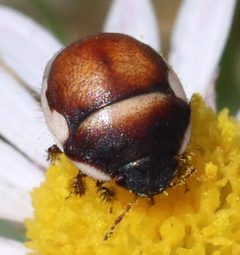
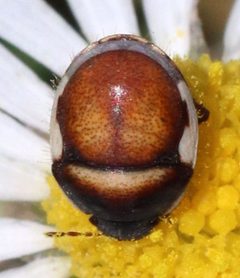
Pronunciation
How to pronounce Thyreocoridae: //ˈθaɪəroʊˌkɔːrɪdiː//
These audio files are automatically generated. While they are not always 100% accurate, they are a good starting point.
Images
Distribution
has a broad distribution including the Americas and Europe. Specific distribution records include: Brazil (Rio Grande do Sul, Santa Catarina, Roraima), Guatemala, and southern New Mexico in North America. European records exist from Denmark, Norway, and Sweden. The Alkindus is neotropical in distribution.
Host Associations
- Leucophyllum frutescens - plantOnly plant observed for Corimelaena incognita; feed on dried fruits from previous year, then on current year's fruit
- Galium concinnum - plantDocumented plant for Corimelaena harti in Ohio (Rubiaceae)
- Daucus carota - plantWild carrot; for Corimelaena lateralis lateralis
Life Cycle
Corimelaena incognita is with five nymphal stadia. averages 8.33 days at 25°C. Nymphal stadia average: first 7.27 days, second 4.10 days, third 4.51 days, fourth 4.90 days, fifth 8.54 days. of Galgupha are cylindrical (0.8–0.9 mm long, 0.5–0.6 mm wide), white, with shiny translucent ; laid singly or in pairs, usually glued beneath bracts of developing fruits.
Behavior
Corimelaena incognita overwinter in leaf litter and emerge in early February. Oviposition occurs from early April through late September. are laid singly or in pairs, typically glued beneath bracts of developing fruits.
Similar Taxa
- CydnidaeHistorically classified as within Cydnidae; indicates Cydnidae is the nearest group to within Pentatomoidea
- CorimelaenidaeSome modern classifications place as Thyreocorinae within Corimelaenidae; of thyreocorids are similar to corimelaenines
More Details
Taxonomic History
The name (1843) has nomenclatural priority over Corimelaenidae (1872). Classifications by Henry & Froeschner and Rider recognized Thyreocoridae at level. Some authors have treated this group as Thyreocorinae within Cydnidae or Corimelaenidae. The Thyreocoridae in the broadest sense (including Parastrachiinae) is not uniform regarding , oviposition , and maternal care.
Immature Stages Knowledge Gap
stages are known in only 11 of . Detailed descriptions exist for Corimelaena incognita, C. obscura, and C. lateralis lateralis, plus ultrastructure for two Galgupha species.
Sources and further reading
- BugGuide
- Wikipedia
- GBIF taxonomy match
- iNaturalist taxon
- NCBI Taxonomy
- Catalogue of Life
- Revision of the genus Alkindus Distant (Hemiptera: Heteroptera: Thyreocoridae: Corimelaeninae)
- Galium concinnum (Rubiaceae), Host Plant of Corimelaena harti (Hemiptera: Heteroptera: Thyreocoridae) in Ohio
- Life History and Laboratory Rearing of Corimelaena obscura (Heteroptera: Thyreocoridae) with Descriptions of Immature Stages
- Life History and Laboratory Rearing of Corimelaena incognita (Hemiptera: Heteroptera: Thyreocoridae), with Descriptions of Immature Stages
- Life History of Corimelaena lateralis lateralis (Hemiptera: Thyreocoridae) with Descriptions of Immature Stages and List of Other Species of Scutelleroidea Found with It on Wild Carrot
- Egg ultrastructure of two species of Galgupha Amyot & Serville, with a discussion of the eggs and oviposition patterns of thyreocorid and allied groups (Hemiptera: Heteroptera: Pentatomoidea: Thyreocoridae)