
Brachyplatys
Boisduval, 1835
black bean bug
Species Guides
1- Brachyplatys subaeneus(black bean bug)
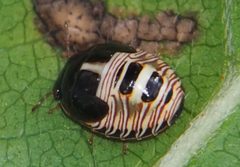
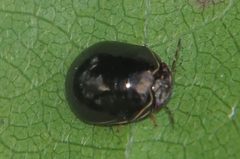
Brachyplatys is a of shield bugs in the Plataspidae. The genus contains at least eight described , with Brachyplatys subaeneus (Westwood, 1837) being the most widely documented due to its status as an agricultural pest. Native to Asia, B. subaeneus has established across the Americas including Panama, Colombia, Ecuador, Rica, Mexico, the Dominican Republic, and Guadeloupe. The species is commonly known as the black bean and poses a serious threat to legume crops in invaded regions.
Pronunciation
How to pronounce Brachyplatys: //ˌbrækɪˈpleɪtɪs//
These audio files are automatically generated. While they are not always 100% accurate, they are a good starting point.
Images
Distribution
Native range of B. subaeneus comprises three genetically distinct lineages in Asia (northern, Philippine, and southern regions). Introduced established in Panama, Colombia (Bolívar and Valle del Cauca), Ecuador, Rica, Mexico, the Dominican Republic, and Guadeloupe. modeling indicates potential for further expansion throughout northern and central South America.
Ecological Role
Brachyplatys subaeneus functions as an agricultural pest in introduced regions, with documented negative consequences to local legume crops. Genetic studies indicate invasive in Panama originated from the northern Asian lineage. The ' spread pattern suggests ongoing range expansion capability in tropical and subtropical climates.
Human Relevance
B. subaeneus is a significant pest of legume crops with economic importance in invaded regions. Early detection and monitoring are emphasized for effective management. Taxonomic confusion with B. vahlii has complicated identification of introduced in the Americas.
Similar Taxa
- Brachyplatys vahliiHistorically confused with B. subaeneus in reports of introduced to Panama; syntypes of both have been illustrated to clarify diagnostic characters
Sources and further reading
- BugGuide
- Wikipedia
- GBIF taxonomy match
- iNaturalist taxon
- NCBI Taxonomy
- The current distribution of Brachyplatys subaeneus 1 in Mexico
- Native genetic structure of black bean bug Brachyplatys subaeneus: Implications for pest management
- Two newly introduced Heteroptera (Insecta: Hemiptera) species in Colombia: Brachyplatys subaenus (Plataspidae) and Thaumastocoris peregrinus (Thaumastocoridae)
- The identity of the Brachyplatys species recently introduced to Panama, with a review of bionomics (Hemiptera: Heteroptera: Plataspidae)