
Mecidea
Dallas, 1851
narrow stink bugs
Species Guides
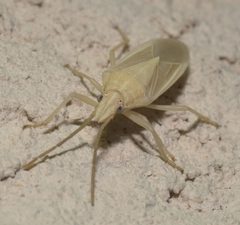
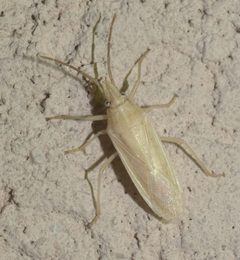
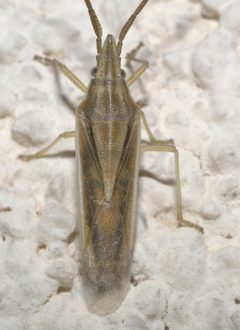
2Mecidea is a of narrow-bodied stink bugs (Pentatomidae) comprising eight described . It is the sole genus in the tribe Mecideini native to the New World. Species are grass-feeding found in xeric and semiarid grasslands, with documented activity throughout the year including winter months. The genus has been studied primarily through work on M. major and M. minor in the southwestern United States.
Pronunciation
How to pronounce Mecidea: //mɛˈsaɪdiə//
These audio files are automatically generated. While they are not always 100% accurate, they are a good starting point.
Identification
Mecidea are distinguished from other Pentatomidae by their narrow, elongate body form, which contrasts with the broad, shield-shaped bodies typical of most stink bugs. Within the , species are differentiated by size (M. major is notably larger than M. minor) and subtle morphological characters. Nymphal instars can be distinguished by body size and the presence and relative development of wing pads; first instars are small and tend to cluster.
Images
Habitat
Xeric and semiarid grasslands; elevations of approximately 1200-1250 m in studied . Found primarily on grasses including Lehmann lovegrass (Eragrostis lehmanniana), grama grasses (Bouteloua spp.), and tobosagrass (Pleuraphis mutica).
Distribution
New World distribution ranging from Minnesota, southern Illinois, and Missouri west to Arizona and south to Mexico; recorded from Florida (possibly adventitious). The is the only member of tribe Mecideini native to the Americas.
Seasonality
Year-round activity including winter months. with possibility of a partial third . collected January through November; and late instars (fourth and fifth) present during winter and capable of .
Diet
Phytophagous; grass . Documented feeding on Lehmann lovegrass, grama grasses, tobosagrass, Bermuda grass, and various other grasses. Some records of feeding on Asteraceae including Senecio and Baccharis neglecta.
Host Associations
- Eragrostis lehmanniana - primary Lehmann lovegrass; primary in southern New Mexico studies
- Bouteloua spp. - primary grama grasses including B. curtipendula, B. eriopoda, B. gracilis
- Pleuraphis mutica - primary tobosagrass
- Cynodon dactylon - Bermuda grass
- Muhlenbergia porteri - bush muhly
- Sporobolus flexuosus - mesa dropseed
- Aristida purpurea - Wright's threeawn
- Senecio - Asteraceae
- Baccharis neglecta - Asteraceae
Life Cycle
Five nymphal instars. First instar is non-feeding and tends to cluster. laid in regular alternating double rows of 3-14 eggs (mean 9.6) on undersides of leaves, flowers, and maturing of grasses. Eggs glued to one another and substrate; yellowish white when deposited, cream-colored after 1-3 days, light brown at maturity; eyespots visible in 4-5 days. , fourth and fifth instars overwinter. Spring and summer with summer generation reaching adulthood in fall.
Behavior
First instars are non-feeding and exhibit clustering . Older individuals (, fourth and fifth instars) successfully overwinter and produce younger instars found in January. Year-round activity pattern unusual among temperate Pentatomidae.
Ecological Role
Primary consumer in grassland ; phytophagous on native and introduced grasses.
Similar Taxa
- Other Pentatomidae generaMecidea distinguished by narrow, elongate body form versus broad shield shape of typical stink bugs
- Other Mecideini generaMecidea is the only New World in tribe Mecideini; other genera in this tribe are Old World
More Details
Sources and further reading
- BugGuide
- Wikipedia
- GBIF taxonomy match
- iNaturalist taxon
- NCBI Taxonomy
- Life history of Mecidea major with descriptions of nymphal instars (Hemiptera, Heteroptera, Pentatomidae)
- Life History and Laboratory Rearing of Mecidea minor (Hemiptera: Heteroptera: Pentatomidae), with Descriptions of Immature Stages
- Figure 2 from: Bundy CS, McPherson JE (2018) Life history of Mecidea major with descriptions of nymphal instars (Hemiptera, Heteroptera, Pentatomidae). In: Wheeler Jr AG (Ed.) A Festschrift Recognizing Thomas J. Henry for a Lifetime of Contributions to Heteropteran Systematics. ZooKeys 796: 335-346. https://doi.org/10.3897/zookeys.796.21325
- Figure 1 from: Bundy CS, McPherson JE (2018) Life history of Mecidea major with descriptions of nymphal instars (Hemiptera, Heteroptera, Pentatomidae). In: Wheeler Jr AG (Ed.) A Festschrift Recognizing Thomas J. Henry for a Lifetime of Contributions to Heteropteran Systematics. ZooKeys 796: 335-346. https://doi.org/10.3897/zookeys.796.21325
- Figures 6-9 from: Bundy CS, McPherson JE (2018) Life history of Mecidea major with descriptions of nymphal instars (Hemiptera, Heteroptera, Pentatomidae). In: Wheeler Jr AG (Ed.) A Festschrift Recognizing Thomas J. Henry for a Lifetime of Contributions to Heteropteran Systematics. ZooKeys 796: 335-346. https://doi.org/10.3897/zookeys.796.21325
- Figures 3-5 from: Bundy CS, McPherson JE (2018) Life history of Mecidea major with descriptions of nymphal instars (Hemiptera, Heteroptera, Pentatomidae). In: Wheeler Jr AG (Ed.) A Festschrift Recognizing Thomas J. Henry for a Lifetime of Contributions to Heteropteran Systematics. ZooKeys 796: 335-346. https://doi.org/10.3897/zookeys.796.21325
- Describe the morphology and mitochondrial genome of Mecidea indica Dallas, 1851 (Hemiptera, Pentatomidae), with its phylogenetic position.