
Agonoscelis
Spinola, 1837
Species Guides
1- Agonoscelis puberula(African cluster bug)
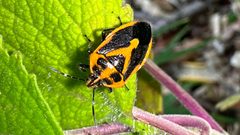
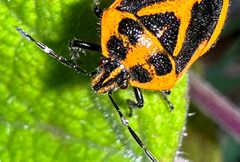
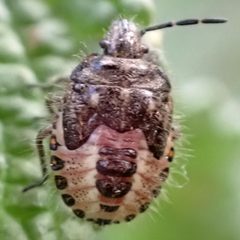
Agonoscelis is a of shield bugs (Pentatomidae) in the tribe Agonoscelidini. The genus contains approximately 19–22 native to the Afrotropics and Australia, with one species, A. puberula, established in the New World. Several species are agricultural pests of sorghum, sunflower, and other crops. range from 8 to 12 mm in length and possess five nymphal stages.
Pronunciation
How to pronounce Agonoscelis: //ˌæɡəˈnɒsɪlɪs//
These audio files are automatically generated. While they are not always 100% accurate, they are a good starting point.
Images
Habitat
Agricultural fields, particularly sorghum production areas; specific tree serve as preferred resting and sheltering sites where individuals aggregate with other pentatomids.
Distribution
Native to the Afrotropics and Australia; one (A. puberula) is established in the New World, with the oldest record from Cuba dating to 1978. Within Africa, documented in Sudan (Gedarif, Blue Nile, North Darfur, Sennar States), Botswana, Namibia, South Africa, Zambia, and Angola.
Diet
Developing seeds of sorghum (millet), sunflower, and cereals; also feeds on herbs including horehound and thyme, and has been observed on flax, cotton, coffee, and cacao. Specific feeding damage occurs at the milky stage of grain development.
Host Associations
- Sorghum - pestprimary ; causes severe economic damage in Sudan
- Helianthus annuus (sunflower) - pestdeveloping seeds
- Marrubium vulgare (horehound) - pestA. rutila specific association
- Thymus - pestherb feeding
- Linum (flax) - pestherb feeding
- Gossypium (cotton) - pestherb feeding
- Coffea (coffee) - associationswarming observed
- Theobroma cacao (cacao) - associationswarming observed
Life Cycle
Five nymphal stages precede adulthood. No further details on developmental timing or reproductive are documented.
Behavior
Aggregates at specific resting sites, particularly certain tree types; forms mixed- with other pentatomids at sheltering locations. Exhibits roosting that facilitates targeted control efforts.
Ecological Role
Agricultural pest causing severe economic damage to sorghum production in Sudan; some may contribute to weed control. Serves as for associated pentatomid at sheltering sites.
Human Relevance
Major pest of sorghum (Dura) in Sudan requiring chemical control campaigns; target of research using oils (neem, sunflower, sesame) as alternatives to synthetic . One introduced to Cuba, possibly via military transport from Angola during Cold War conflicts.
Similar Taxa
- Carbula pedalisCo-occurs in Sudan sorghum areas but shelters in mountain caves rather than trees; distinct resting site preference and associated pentatomid
- Nezara viridulaBoth are pentatomid agricultural pests, but Agonoscelis are distinguished by Afrotropical/Australian native range and specific association with sorghum and sunflower seed feeding
More Details
Tribe monotypy
Agonoscelis is the sole in the tribe Agonoscelidini, indicating a distinct phylogenetic lineage within Pentatominae.
Scent gland position
The defensive is located terminally at the end of the , a trait noted for the .
Sources and further reading
- BugGuide
- Wikipedia
- GBIF taxonomy match
- iNaturalist taxon
- NCBI Taxonomy
- Agonoscelis puberula (Hemiptera: Heteroptera: Pentatomidae) in Cuba – the oldest record of an alien species in the New World
- Distribution Patterns and Abundance of the Dura Andat, Agonoscelis pubescens (Thunb.), and other Pentatomids Across Habitat Patches in the Central Clay Plain of Sudan*
- Efficacy of some botanical oils on the control of dura andat <i>Agonoscelis pubescens</i> (Hemiptera: Pentatomidae) at Elsouky, Sennar State, Sudan