
Zicrona americana
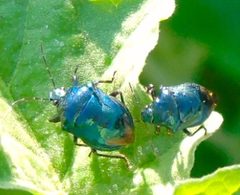
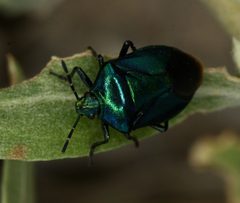
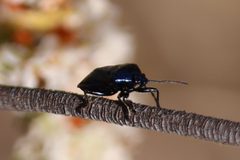
Zicrona americana is a in the Pentatomidae, Asopinae. Members of this subfamily are distinguished from plant-feeding pentatomids by their predatory habits. The is part of a containing relatively few species, with Zicrona being recognized as a distinctive Old World lineage that has been introduced to North America. Asopine stink bugs are generally valued as agents due to their on pest insects.
Pronunciation
How to pronounce Zicrona americana: /zɪˈkroʊnə əˌmɛrɪˈkeɪnə/
These audio files are automatically generated. While they are not always 100% accurate, they are a good starting point.
Images
Distribution
Native to the Palearctic region; introduced to North America. iNaturalist records indicate established with 61 observations documented.
Diet
Predatory. As a member of Asopinae, feeds on other insects. Specific prey records for this are not well documented in available sources.
Ecological Role
of other insects. As an introduced asopine , may contribute to of pest in its non-native range.
Human Relevance
Potential value as a agent due to predatory habits. No significant documented negative impacts to agriculture or human health.
Similar Taxa
- Podisus spp.Other common predatory stink bugs in Asopinae; differ in body shape and coloration patterns
- Perillus spp.North American native asopines with similar predatory ; differ in pronotal and abdominal
- Plant-feeding Pentatomidae (e.g., Halyomorpha halys, Nezara viridula)Distinguished by Asopinae having more convex body profile, often metallic coloration, and predatory rather than phytophagous mouthpart structure and
More Details
Taxonomic Note
Zicrona is an Old World ; the specific epithet 'americana' refers to its introduced range in North America rather than native origin. The was likely introduced to North America from Eurasia, though detailed introduction history is not well documented in available sources.
Asopinae Characteristics
Members of Asopinae (predatory stink bugs) can be distinguished from other Pentatomidae by: more convex body shape, often metallic or brightly colored appearance, and forelegs adapted for grasping prey. They lack the distinctive auricle found in many phytophagous pentatomids.
Sources and further reading
- BugGuide
- iNaturalist taxon
- Deerly departed: food for flesh-recycling carrion beetles - Margined carrion beetle, Oiceoptoma noveboracense, and American carrion beetle, Necrophila americana — Bug of the Week
- Unwelcome guests in Hawai’i: American cockroach, Periplaneta americana, German cockroach, Blattella germanica, and Western yellowjacket, Vespula pensylvanica — Bug of the Week
- As a Watershed is Urbanized, Damselflies Show Declines
- Silphidae | Beetles In The Bush
- Explorer or Wallflower? Study Shines Light on Cockroach Personalities
- Botanizing at St. Joe State Park | Beetles In The Bush