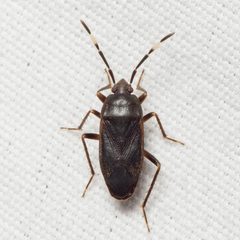
Cistalia explanata
Classification
- Phylum: Arthropoda
- Subphylum: Hexapoda
- Class: Insecta
- Order: Hemiptera
- Suborder: Heteroptera
- Infraorder: Pentatomomorpha
- Superfamily: Lygaeoidea
- Family: Rhyparochromidae
- Subfamily: Rhyparochrominae
- Tribe: Lethaeini
- Genus: Cistalia
- Species: explanata
Pronunciation
How to pronounce Cistalia explanata: //sɪsˈtɑːliə ɛkspləˈnɑːtə//
These audio files are automatically generated. While they are not always 100% accurate, they are a good starting point.
Summary
Cistalia explanata is a dirt-colored seed bug found predominantly in the southwestern United States and Mexico, notable for its seed feeding habits, especially in grasslands and agricultural areas.
Physical Characteristics
Dirt-colored seed bug, often exhibiting coloration suitable for camouflage in its habitat.
Identification Tips
Look for its characteristic seed bug appearance; identification may require inspection of mating habits or specific morphological traits that distinguish it from similar taxa.
Habitat
Found in areas with grasslands or agricultural fields where seeds are plentiful.
Distribution
Southwestern United States to Louisiana, specifically in California, Nevada, Arizona, coastal Texas, Louisiana, and Kansas; also present in Mexico.
Diet
Feeds on seeds, primarily those of various grasses and other plants.
Life Cycle
Life cycle includes eggs, nymphs, and adults with nymphs typically hatching from eggs in the warm months and developing through several instars before reaching adulthood.
Reproduction
Reproduces sexually; specific mating behaviors and patterns might be observed during its active months.
Predators
Natural predators may include birds and other insectivorous species.
Conservation Status
Not currently listed as endangered or threatened.
Ecosystem Role
Acts as a seed feeder, potentially influencing plant population dynamics; can be a prey item for higher trophic levels.
Economic Impact
May impact agricultural practices due to its seed feeding habits, especially in crop fields.
Collecting Methods
- Light trapping
- Sweep netting
- Hand collection in suitable habitats
Preservation Methods
- Pinning for specimens
- Ethanol preservation for molecular studies
Misconceptions
Often confused with other seed bugs, but distinct ecological roles based on specific dietary preferences.
Tags
- Cistalia
- seed bug
- Rhyparochromidae
- North America
- insect