
Lygaeospilus fusconervosus
Barber, 1948
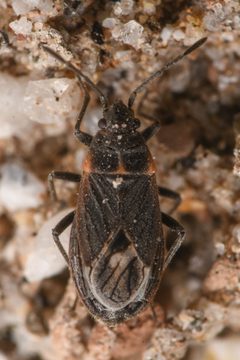
Lygaeospilus fusconervosus is a of in the Lygaeidae, described by Barber in 1948. It belongs to a of small to medium-sized lygaeid . The species is known from the United States, with records documented in the mid-20th century. Like other members of Lygaeidae, it is presumed to be associated with seeds, though specific biological details remain poorly documented.
Pronunciation
How to pronounce Lygaeospilus fusconervosus: /laɪˈdʒiːəˌspɪləs ˌfʌskoʊˈnɜrvoʊsəs/
These audio files are automatically generated. While they are not always 100% accurate, they are a good starting point.
Identification
The specific epithet fusconervosus (dark-veined) suggests darkened wing venation as a distinguishing feature. As a member of Lygaeospilus, it likely shares the characteristics of slender body form and relatively long . Positive identification requires comparison with the original description (Barber 1948) and examination of male genitalia, which are critical for -level determination in this genus.
Images
Distribution
United States; specifically recorded from localities documented by Slater (1964). GBIF indicates presence in North America with country-level confirmation for USA.
Similar Taxa
- Lygaeospilus xanthocnemusCongeneric with which it may be confused; separation requires examination of wing venation patterns and male genitalia.
- Other Lygaeidae genera (e.g., Lygaeus, Oncopeltus)Similar general body plan and coloration patterns; distinguished by -specific characters including proportions and pronotal shape.
More Details
Taxonomic history
Described by Barber in 1948, this has received limited subsequent study. The Lygaeospilus was revised by Slater (1964), who provided distribution records for this species.
Data limitations
With only 52 iNaturalist observations and no recent taxonomic revisions, detailed biological information for this is sparse in accessible literature.