
Ochterus
Latreille, 1807
Species Guides
3- Ochterus americanus(velvety shore bug)
- Ochterus banksi(velvety shore bug)
- Ochterus perbosci
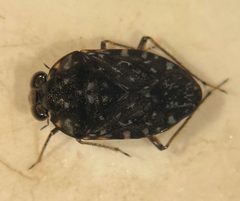
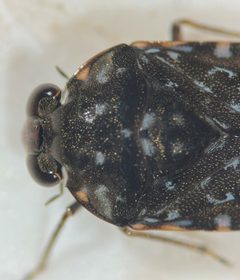
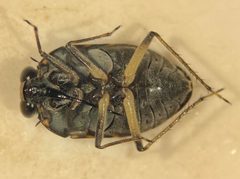
Ochterus is a of velvety shore bugs in the Ochteridae (Hemiptera: Heteroptera: Nepomorpha: Ochteroidea). The genus contains approximately 80 and 4 distributed worldwide, making it the most species-rich genus in the family. Members are small, gracile, widely oval insects with velvety black coloration often marked with small yellowish spots. They possess very short concealed in grooves below the , a diagnostic synapomorphy for the infraorder Nepomorpha.
Pronunciation
How to pronounce Ochterus: /ˈɒktərəs/
These audio files are automatically generated. While they are not always 100% accurate, they are a good starting point.
Identification
Distinguished from other Ochteridae by combination of worldwide distribution, gracile oval body form, and specific genitalic structures. From Megochterus (Australia, 2 ) and Ocyochterus (NW South America, 2 species) by geographic range and subtle morphological differences in pronotum and genitalia. Species-level identification requires examination of striation, pronotum structure, body coloration, and especially male genitalic structures (genital capsule shape and right paramere ).
Images
Appearance
Small, gracile, widely oval insects with velvety black coloration often marked with small yellowish spots. Very short concealed in grooves below the . (frontal plate) with distinctive structure and striation. Pronotum variable in shape and structure. Body dorsum with variable coloration patterns. Male genital capsule and right paramere structure are important diagnostic features at level.
Habitat
Riparian , margins of streams or ponds, typically on sandy and stony substrates with sparse vegetation. Most prefer sunlit situations, though some occur in shaded habitats. Recently reported from leaf litter in high elevation tropical montane and cloud forests in Central America.
Distribution
Worldwide distribution. Documented from: North America (continental United States, Mexico), Central America ( Rica, Panama, El Salvador), South America (Colombia), Africa (Tanzania, Mozambique, Sudan, Central African Republic, Yemen/Socotra Island, Oman), Asia (China, India, Laos, Thailand, Myanmar, Nicobar Islands), and Australia/New Guinea region. New records continue to expand known range.
Behavior
Cryptic coloration provides effective camouflage on preferred sandy and stony substrates. When disturbed, individuals can run rapidly, jump, and are capable of .
Similar Taxa
- MegochterusAustralian with 2 ; distinguished by restricted geographic range and subtle morphological differences in pronotum structure
- OcyochterusNW South American with 2 ; distinguished by restricted geographic range (Colombia, Ecuador, Peru) and genitalic differences
- Gelastocoridae (toad bugs)Related in Ochteroidea; distinguished by more robust, toad-like body form and different preferences
More Details
Taxonomic History
The was established by Latreille in 1807. Neochterus Mahner, 1993 (originally proposed as subgenus) is considered an unavailable name. Gender agreement corrections have been made for some epithets (e.g., O. paucistriatus, not paucistriata).
Biodiversity Patterns
The Australian region shows surprisingly high compared to the Oriental region and large South Asiatic Islands, though this pattern awaits thorough revision of Oriental and African faunas for confirmation.
Fossil Record
The Ochteridae has a fossil record including 4 and 5 from Jurassic to Miocene deposits, though these are not assignable to Ochterus itself.
Sources and further reading
- BugGuide
- Wikipedia
- GBIF taxonomy match
- iNaturalist taxon
- NCBI Taxonomy
- Catalogue of Life
- Revision of the genus Ochterus Latreille in the Australian region (Heteroptera: Ochteridae)
- Revision of the genus Ochterus (Hemiptera: Heteroptera: Ochteridae) in Mesoamerica and the United States
- Taxonomic catalogue of the family Ochteridae with description of Ochterus papaceki sp. nov. from Socotra Island and Tanzania (Hemiptera: Heteroptera)