
Patapius
Horváth, 1912
Species Guides
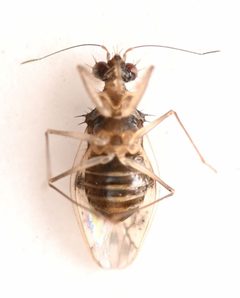
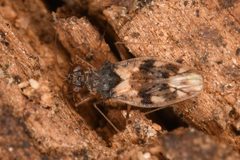
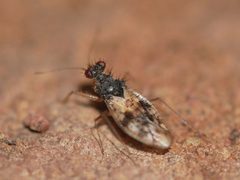
1- Patapius spinosus(spiny-legged bug)
Patapius is a of spiny-legged bugs in the Leptopodidae, comprising seven described . Members of this genus are characterized by their heavily spined bodies and association with coastal or shoreline . The genus has a broad geographic distribution spanning the Mediterranean region, North Africa, sub-Saharan Africa, Southeast Asia, and introduced in North America and Chile.
Pronunciation
How to pronounce Patapius: //pəˈteɪpiəs//
These audio files are automatically generated. While they are not always 100% accurate, they are a good starting point.
Identification
Patapius can be distinguished from other leptopodid by their conspicuously spined bodies, with spines covering the surface. The genus is further characterized by spiny legs, as indicated by the for the . Specific identification to species level requires examination of spine patterns, body proportions, and genitalic structures.
Images
Habitat
Coastal environments, particularly supralittoral zones of sandy beaches and rocky intertidal areas. At least one (P. spinosus) has been documented from both sandy and rocky shoreline .
Distribution
Native range includes the Mediterranean region, North Africa, sub-Saharan Africa (Angola), and Southeast Asia (Thailand). The has been introduced to North America and Chile. The first record from Japan (Osaka Prefecture) was documented in 2002–2004.
Similar Taxa
- LeptopusShares Leptopodidae and similar coastal preferences, but lacks the dense body spination characteristic of Patapius
- ValleriolaAnother leptopodid with overlapping distribution, but distinguished by less pronounced spination and different body proportions
More Details
Taxonomic history
The was established by Horváth in 1912. Most were described in the mid-20th century, with P. spinosus (originally described as Cimex spinosus by Rossi in 1790) being the oldest and most widely distributed species.
Biogeographic significance
The Japanese record of P. spinosus represents both the first record of the from East Asia and the first record of the Leptopodidae from Japan, highlighting the 's potential for long-distance or human-mediated introduction.