
Rheumatobates palosi
Blatchley, 1926
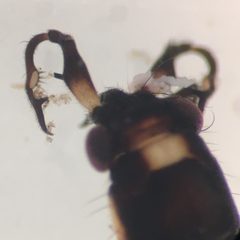
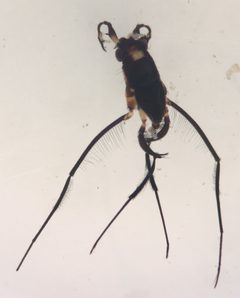
Rheumatobates palosi is a of water strider in the Gerridae, first described by Blatchley in 1926. The Rheumatobates is distinguished by reduced wings and modified midlegs adapted for grasping during mating. This species is known from limited observations and records in North America.
Pronunciation
How to pronounce Rheumatobates palosi: /ˌrjuːmətoʊˈbeɪtiːz pəˈloʊsaɪ/
These audio files are automatically generated. While they are not always 100% accurate, they are a good starting point.
Identification
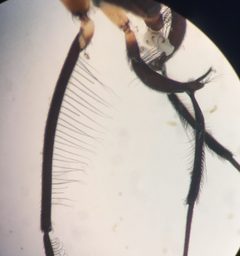
Members of Rheumatobates can be distinguished from other Gerridae by their reduced or absent wings and the presence of modified midlegs in males, which bear grasping structures used during mating. Specific identification of R. palosi requires examination of male genitalia and comparison with .
Images
Habitat
Inhabits freshwater surface , including ponds, lakes, and slow-moving streams. As with other Rheumatobates , likely prefers quiet water surfaces with abundant vegetation or debris.
Distribution
Recorded from North America, specifically the Nearctic region excluding the Western Cordillera and Beringia. Known from Canada and the United States.
Ecological Role
As a surface-dwelling water strider, occupies the air-water interface where it preys on small trapped on the water surface, contributing to top-down control of aquatic and semi-aquatic .
Similar Taxa
- Rheumatobates rileyiOverlapping distribution in eastern North America; distinguished by male genitalic structures and leg modifications
- Rheumatobates bergrothiSimilar reduced wing condition and preference; requires careful examination of male terminalia for separation
More Details
Taxonomic note
The Rheumatobates belongs to the Rhagodotarsinae, a group of wingless or short-winged water striders. The specific epithet 'palosi' honors an individual, though the etymology is not formally documented in the original description.