
Ceratocombus vagans
McAtee & Malloch, 1925
litter bug
Ceratocombus vagans is a of minute true in the Ceratocombidae, commonly known as litter bugs. The species has been described as one of the most generalized members of Hemiptera: Heteroptera, with predatory feeding habits that support the hypothesis that primitive heteropterans were . It occupies a wide geographic range across North America, Central America, and the Caribbean.
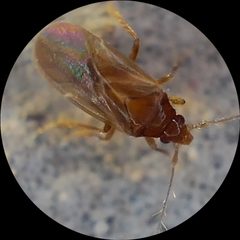
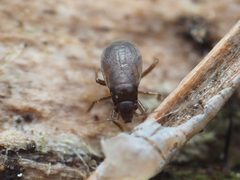
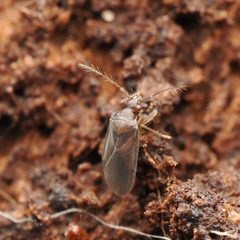
Pronunciation
How to pronounce Ceratocombus vagans: /sɛˌrætoʊˈkoʊmbəs ˈvæɡænz/
These audio files are automatically generated. While they are not always 100% accurate, they are a good starting point.
Identification
Members of the Ceratocombus can be distinguished from other Ceratocombidae by their wing venation and genitalic structures. Ceratocombus vagans specifically is characterized by its generalized compared to other heteropterans. Detailed diagnostic features for this require examination of genitalic structures and wing venation patterns.
Images
Habitat
Found in moss, leaf litter, and under loose bark. These microhabitats provide the humid, sheltered conditions typical for litter-dwelling heteropterans.
Distribution
Widely distributed across much of North America, Central America, and the Caribbean. GBIF records confirm presence in North America, Middle America, and Caribbean regions.
Diet
Predatory. The actively preys on small in its leaf litter and moss microhabitats.
Life Cycle
The undergoes (hemimetabolous development), with stages resembling smaller versions of . Specific details of and nymphal development have been documented in studies.
Ecological Role
As a in leaf litter and moss , the contributes to nutrient cycling and of small soil-dwelling .
Human Relevance
No direct economic or medical significance. The is of interest to entomologists studying the evolution of predatory habits in primitive Heteroptera.
Similar Taxa
- Other Ceratocombidae members share minute size and litter-dwelling habits, but differ in wing venation and genitalic structures
- Other Ceratocombus species require careful examination of genitalic and wing venation for definitive identification
More Details
Evolutionary significance
The generalized and predatory habits of C. vagans have been cited in support of the hypothesis that primitive Heteroptera were rather than herbivorous.
Taxonomic history
Described by McAtee & Malloch in 1925, the has served as a reference point for understanding morphological diversity within the Ceratocombidae.
Sources and further reading
- BugGuide
- Wikipedia
- GBIF taxonomy match
- iNaturalist taxon
- Nocturnal hunters: Mexican redrump tarantula, Brachypelma vagans — Bug of the Week
- A friendly encounter with a very large tarantula: Red Rump Tarantula, Tliltocatl vagans — Bug of the Week
- Spider megacolony study breaks publicity records at Pensoft
- Monday Ménage – Brachyleptura rubrica | Beetles In The Bush
- Zookeys | Blog - Part 2
- Pensoft Editorial Team | Blog - Part 7
- Life History of <i>Ceratocombus Vagans</i> (Hemiptera: Heteroptera: Ceratocombidae), With Notes on the Immature Stages