
Himacerus major
(Costa, 1842)
Grey Damsel Bug
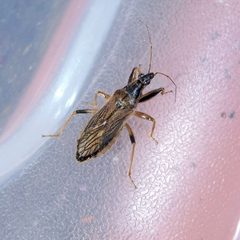
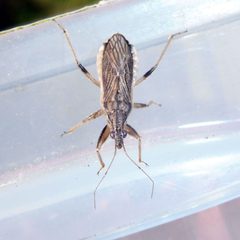
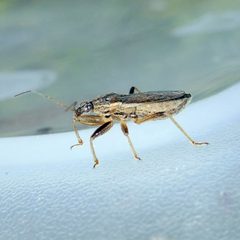
Himacerus major is a Holarctic damsel bug in the Nabidae, commonly known as the Grey Damsel Bug. It is widely distributed across Europe, from Scandinavia and the British Isles to the Caucasus, as well as in North America. The inhabits diverse grassy environments regardless of humidity levels, from dry dunes to wet shorelines, but is notably absent from woodland. It is an active with documented observations of feeding on Auchenorrhyncha.
Pronunciation
How to pronounce Himacerus major: /hɪˈmæsərəs ˈmeɪdʒər/
These audio files are automatically generated. While they are not always 100% accurate, they are a good starting point.
Images
Habitat
Occurs in many different with grass, regardless of humidity level. Found on very dry dune habitats, nutrient-poor grasslands, wet shores of waters without woody vegetation, and inland salt places. Absent from woodland. Occurs in very large numbers near the coast of the Northern Baltic Sea.
Distribution
Holarctic distribution. Range extends from South Scandinavia and southern British Isles across West Europe including the Western Mediterranean, through Central and Eastern Europe to the Caucasus. Also present in North America.
Seasonality
occur from July, rarely from late June, and are active mainly in August and September. Nymphs occur from May and can be observed through autumn. Overwinters as , which females insert in grass.
Diet
Specific prey range unknown. Has been observed sucking on Auchenorrhyncha.
Life Cycle
occurs as the . Nymphs emerge from May onward and can be observed into autumn. appear from July (rarely late June) and are most active in August and September. Females insert eggs into grass.
Behavior
Young nymphs live predominantly on the ground. Older nymphs and may be encountered at night in higher vegetation such as shrubs. During the day they hide in ground litter, grass, or similar cover.
Ecological Role
; has been observed feeding on Auchenorrhyncha. Specific ecological role otherwise not well documented.
More Details
Vertical stratification by life stage
The exhibits distinct vertical stratification: young nymphs are ground-dwelling, while older nymphs and may climb into higher vegetation at night.
Sources and further reading
- BugGuide
- Wikipedia
- GBIF taxonomy match
- iNaturalist taxon
- NCBI Taxonomy
- UC Davis Animal Science Major Ivana Satre Vying for Miss Vietnam Northern California Title | Bug Squad
- Geoffrey Attardo: Growing Presence of This Mosquito: 'A Major Public Health Threat' | Bug Squad
- Meet Andrea Guggenbickler, Outstanding Academic Advisor | Bug Squad
- Marek Borowiec's Awesome Social Insects Award | Bug Squad
- Top Notch Advisors: Elvira Galvan Hack and Robert Kimsey | Bug Squad
- Name That Bug! What About Bob? | Bug Squad