
Gargaphia angulata
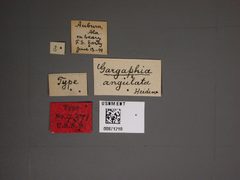
Heidemann, 1899
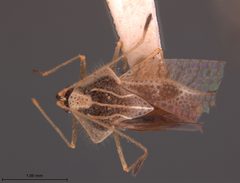
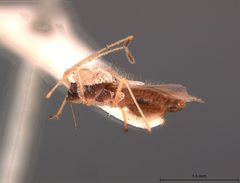
Gargaphia angulata is a of lace bug in the Tingidae, first described by Heidemann in 1899. It is a small true characterized by the reticulated, lace-like forewings typical of its family. The species has been documented across much of North America, with records from numerous U.S. states and Canadian provinces. Like other lace bugs, it is likely associated with specific plants, though detailed biological information remains limited.
Pronunciation
How to pronounce Gargaphia angulata: /ɡarˈɡa.fi.a æŋˈɡu.la.ta/
These audio files are automatically generated. While they are not always 100% accurate, they are a good starting point.
Identification
Gargaphia angulata can be distinguished from other Gargaphia by its angular body margins and specific reticulation patterns on the . The Gargaphia is characterized by broadly expanded, lace-like pronotum and forewings with intricate areolate venation. Species-level identification within Gargaphia requires examination of the pronotal and hemelytral reticulation, body shape, and often male genitalia. G. angulata specifically shows angulate or sharply angled lateral margins of the pronotum and hemelytra.
Images
Distribution
North America, with records from Alabama, Alaska, Arizona, Arkansas, California, Connecticut, Colorado, Delaware, Florida, Georgia, Idaho, Illinois, Indiana, Iowa, Kansas, Kentucky, Louisiana, Maine, Massachusetts, Michigan, Minnesota, Montana, Maryland, Mississippi, Missouri, North Carolina, North Dakota, Nebraska, Nevada, New Hampshire, New Jersey, New Mexico, New York, Ohio, Oklahoma, Oregon, Pennsylvania, Rhode Island, South Carolina, South Dakota, Tennessee, Texas, and additional Canadian provinces.
Similar Taxa
- Gargaphia lunulataBoth are North American Gargaphia with similar lace-like wing structure; G. lunulata can be distinguished by its more rounded, lunulate (crescent-shaped) markings rather than the angulate margins of G. angulata
- Other Gargaphia speciesNumerous share the expanded pronotum and reticulate ; precise identification requires detailed examination of reticulation patterns and body margin shape
- Corythaica speciesAnother of Tingidae with similar lace-like appearance; Corythaica typically show different pronotal and hemelytral expansion patterns and are often associated with Solanaceae
More Details
Taxonomic status
The was described by Otto Heidemann in 1899 and remains a valid, accepted species in the Gargaphia. The genus Gargaphia is one of the larger genera in the Tingidae, with numerous species distributed primarily in the New World.
Collection records
GBIF records indicate presence across a broad North American range, though the specific plants and ecological preferences for this have not been extensively documented in the available literature.