
Dictyla
Stål, 1874
lace bugs
Species Guides
3- Dictyla echii(Bugloss Lace Bug)
- Dictyla ehrethiae(Anacua Lace Bug)
- Dictyla labeculata(lace bug)
Dictyla is a of lace bugs ( Tingidae) comprising at least 80 described . Members are phytophagous, feeding on plant sap and often causing chlorotic damage to foliage. Several species have been studied as potential agents for plants. The genus has a wide geographic distribution including Palearctic, Nearctic, and Neotropical regions.
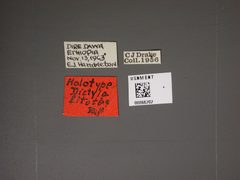
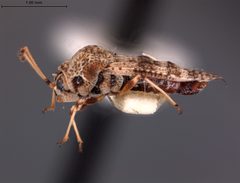
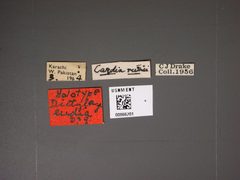
Pronunciation
How to pronounce Dictyla: /ˈdɪktɪlə/
These audio files are automatically generated. While they are not always 100% accurate, they are a good starting point.
Images
Habitat
are associated with diverse plants including herbaceous plants and trees. Dictyla echii occurs in areas with Echium vulgare, with in soil near host plant rosettes. Dictyla monotropidia inhabits laurel trees (Cordia alliodora) in forest and agricultural settings.
Distribution
Palearctic, Nearctic, and Neotropical regions. Specific records include: southwestern Québec and southeastern Ontario, Canada; northeastern United States; Denmark, Norway, Sweden; and Antioquia department, Colombia.
Diet
Phloem sap from plants. and nymphs feed on rosettes, stems, and flower shoots, causing chlorotic foliage and stunted growth.
Host Associations
- Echium vulgare - primary Boraginaceae; for D. echii
- Cordia alliodora - primary Boraginaceae; for D. monotropidia
Life Cycle
Development includes and five nymphal instars before adulthood. Dictyla monotropidia completes egg-to- development in approximately 44-46 days at 22°C: eggs 15.5-24 days, nymphal stage 21-29 days. Dictyla echii is , as adults in soil in reproductive .
Behavior
Ecological Role
Herbivores that can significantly impact plant health. Dictyla monotropidia is considered a major pest of laurel trees in Colombia. Some are under investigation as agents for plants such as (Echium plantagineum).
Human Relevance
Dictyla monotropidia is a significant pest of laurel trees (Cordia alliodora) in Colombian forestry, causing premature leaf death and drop. Dictyla echii and D. nassata have been evaluated as potential agents for Echium .
Sources and further reading
- BugGuide
- Wikipedia
- GBIF taxonomy match
- iNaturalist taxon
- NCBI Taxonomy
- Catalogue of Life
- Natural history of Dictyla echii (Hemiptera: Tingidae) in Ontario and Québec, Canada
- Natural History of the Lace Bug Dictyla labeculata (Uhler) (Hemiptera: Tingidae) and First Confirmed Host Plant Record
- Biology Aspects of Dictyla Monotropidia (Hemiptera: Tingidae) In Laurel Trees Cordia Alliodora (Boraginaceae)
- Host specificity of the two lace bugs,Dictyla echii andDictyla nassata [Hem.: Tingidae] potential biological control agents for paterson's curse (Echium plantagineum)
- Biologia, Habitos Y Distribucion En Antioquia de la Chinche de Encaje Dictyla Monotropidia Stal (Hemipthera: Tingidae) En Nogal Cafetero Cordia Alliodora (Ruiz & Pavon) Cham