
Capsus ater
(Linnaeus, 1758)
black plant bug
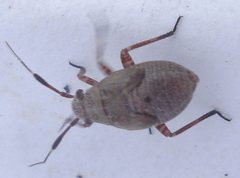
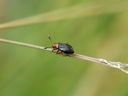
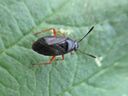
Capsus ater is a plant bug in the Miridae, commonly known as the black plant bug. It is widely distributed across North America, Europe, and northern Asia, with evidence suggesting North American origin followed by introduction to other regions. The inhabits dry to moderately moist open and feeds on various grasses without apparent preference for particular species or .
Pronunciation
How to pronounce Capsus ater: /ˈkæpsəs ˈeɪtər/
These audio files are automatically generated. While they are not always 100% accurate, they are a good starting point.
Identification
Images
Habitat
Found in dry to moderately moist, open to partially shaded . In the Alps, it occurs at elevations exceeding 2000 meters above sea level.
Distribution
Native to North America; introduced and established in Europe, northern Asia (including Siberia), and Africa. Specific records include: Canada (Ontario, Newfoundland), USA (New York, Ohio, West Virginia, Wisconsin), Britain, Denmark, Germany, Hungary, Italy, Spain, Sweden, Turkey, Corsica, Russia (Sakhalin Island, Kurile Islands).
Diet
Feeds on various grasses (Poaceae). No particular preference for specific grass or has been documented.
Host Associations
- Poaceae - food plant feeder on grasses without -level preference
More Details
Taxonomic note
Authorship sometimes cited as (Linnaeus, 1758). The shows a classic pattern of presumed North American origin with subsequent Palearctic establishment.
Sources and further reading
- BugGuide
- Wikipedia
- GBIF taxonomy match
- iNaturalist taxon
- Catalogue of Life
- A rare opportunity to do fall insect collecting in western North America | Beetles In The Bush
- Nomenclatural changes in Phymatodes | Beetles In The Bush
- Clouded beetles amidst spectacular scenery | Beetles In The Bush
- January | 2014 | Beetles In The Bush
- Great Basin | Beetles In The Bush
- Pensoft showcases open science and restoration innovation at the IUCN World Conservation Congress