
Camptozygum
Reuter, 1896
Species Guides
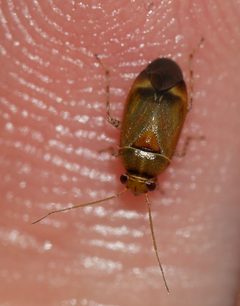
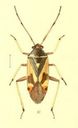
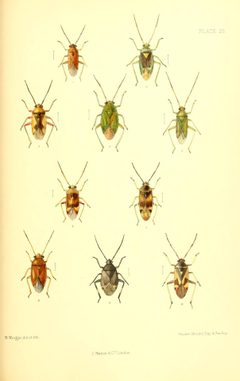
1Camptozygum is a of plant bugs in the Miridae, containing at least two described : C. aequale and C. pumilio. The genus is native to Europe, with C. aequale introduced to the Nearctic region, likely via nursery stock importations of Pinus sylvestris. The genus belongs to the tribe Mirini within the Mirinae.
Pronunciation
How to pronounce Camptozygum: //ˌkæmp.toʊˈzaɪ.ɡəm//
These audio files are automatically generated. While they are not always 100% accurate, they are a good starting point.
Identification
Members of Camptozygum can be distinguished from similar mirine by genitalic characters; specific diagnostic features require examination of male and female genitalia. C. aequale is distinguished from C. pumilio by structural differences in the male genitalia and subtle differences in coloration and body proportions.
Images
Distribution
Europe (native range, with records from Denmark, Norway, and Sweden); Nearctic region (introduced), including Canada. The introduction for C. aequale is associated with importation of Pinus sylvestris nursery stock.
Host Associations
- Pinus sylvestris - associationIntroduction for C. aequale into Canada; not confirmed as a true plant
Human Relevance
C. aequale has been introduced to North America through human-mediated transport of nursery stock, representing an accidental introduction rather than an established pest of economic significance. No documented agricultural or forestry damage has been reported.
Similar Taxa
- Pseudoloxops coccineusAnother European Orthotylini introduced to Canada through nursery stock importations; both species share similar introduction and were discussed in the same distributional study
More Details
Taxonomic history
The was established by Reuter in 1896. C. aequale was originally described by Villers in 1789 and later transferred to this genus. C. pumilio was described by Reuter in 1902.
Introduction records
C. aequale was first reported from the Nearctic region by Wheeler and Henry (1973), with additional records documented by Kelton (1983). The has been collected in Ontario, Canada.