
Curalium
Schuh, Weirauch & Henry in Schuh et al., 2008
Species Guides
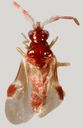
1Curalium is a of true bugs (Hemiptera: Heteroptera) established in 2008 as the sole member of the Curaliidae. The genus contains a single described , Curalium cronini, known only from male specimens collected in the southeastern United States. Its distinctive physical and genetic characteristics warranted placement in a new family, representing a rare example of a higher-level taxonomic discovery in the 21st century.
Pronunciation
How to pronounce Curalium: //kʊˈreɪ.li.əm//
These audio files are automatically generated. While they are not always 100% accurate, they are a good starting point.
Identification
No females are known, limiting identification guidance. Males of the sole C. cronini are distinguished by their extremely small size (approximately 1.5 mm), red body coloration, and unique morphological features that separate Curaliidae from all other heteropteran . Genetic data support its distinct familial placement. The combination of minute size, red coloration, and geographic restriction to the southeastern United States may aid in field recognition, though positive identification requires expert examination.
Images
Habitat
Specimens have been collected in northern Florida and Louisiana. Specific details such as vegetation type, moisture regime, or substrate preferences are not documented.
Distribution
Southeastern United States: documented from northern Florida and Louisiana.
Seasonality
Specimens have been collected between 1997 and 2007; specific seasonal activity patterns are unknown.
Similar Taxa
- Other Cimicoidea families (e.g., Cimicidae, Anthocoridae)Curaliidae differs in unique morphological and genetic characteristics that warranted familial separation from related cimicomorphan . Expert morphological examination is required to distinguish it.
More Details
Taxonomic significance
Curalium represents one of the few new insect described in the 21st century, highlighting ongoing discoveries even in well-studied regions like the United States. The absence of known females suggests either extreme with undiscovered females or potentially parthenogenetic , though neither hypothesis has been tested.
Discovery history
The and were established in 2008 based on specimens collected over a decade (1997–2007), indicating either rarity or cryptic habits.