
Agallia
Curtis, 1833
Species Guides
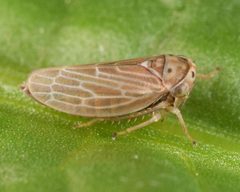
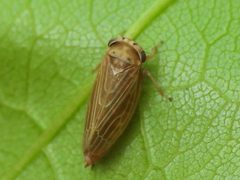
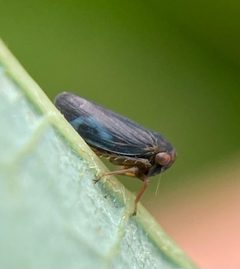
10Agallia is a of leafhoppers in the Megophthalminae, erected by John Curtis in 1833. The genus contains approximately eight described in North America, with species distributed across the western Palaearctic realm and the Americas. Some species are known agricultural pests, including A. albidula, which phytoplasmas causing in citrus. Courtship in A. constricta involves distinctive with alternating ticking sounds between sexes.
Pronunciation
How to pronounce Agallia: /əˈɡæliə/
These audio files are automatically generated. While they are not always 100% accurate, they are a good starting point.
Identification
Members of Agallia can be distinguished from other leafhopper by their placement in the tribe Agalliini within Megophthalminae. Specific diagnostic features for the genus are not documented in available sources.
Images
Habitat
have been documented in citrus orchards (A. albidula in Brazil). Broader preferences for the remain unspecified.
Distribution
Western Palaearctic realm; the Americas. Approximately eight occur in North America. Distribution records include Denmark, Norway, Sweden, and Vermont (United States).
Host Associations
- Citrus - plantA. albidula collected from citrus orchards with Huanglongbing-like ; used in transmission experiments
- 'Candidatus Phytoplasma pruni' (16SrIII-AD subgroup) - A. albidula demonstrated as of this phytoplasma causing in citrus
Behavior
During and mating, males and females of A. constricta alternate in producing ticking sounds.
Ecological Role
A. albidula functions as a , transmitting phytoplasmas that contribute to spread of Huanglongbing-like in citrus.
Human Relevance
Agricultural pest significance: A. albidula phytoplasmas affecting citrus production in Brazil. The has been used in cytological research, with A. constricta line AC-20 serving as a model for studying with diffuse kinetochores and holokinetic chromatin movement.
More Details
Cytological significance
A. constricta line AC-20 has been extensively studied for its unusual mitotic mechanics, including diffuse kinetochores and holokinetic anaphase chromatin movement, making it a model organism for cell research.
Taxonomic note
The is classified in tribe Agalliini, Megophthalminae, Cicadellidae. The Global Biodiversity Information Facility and iNaturalist document approximately 8 described in the genus.
Sources and further reading
- BugGuide
- Wikipedia
- GBIF taxonomy match
- iNaturalist taxon
- NCBI Taxonomy
- Catalogue of Life
- The leafhopper Agallia albidula is a vector of a phytoplasma associated with “Huanglongbing”-like symptoms in citrus in Brazil
- Diffuse kinetochores and holokinetic anaphase chromatin movement during mitosis in the hemipteran Agallia constricta (leafhopper) cell line AC‐20