
Macropsis
Lewis, 1834
Species Guides
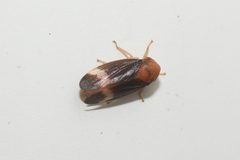
30Macropsis is a of leafhoppers (Cicadellidae) established by R.H. Lewis in 1834. are associated with diverse plants including willows, poplars, plums, and blackberries. Some species have been documented as of phytoplasma affecting cultivated crops. The genus has been subject to extensive taxonomic revision due to historical misidentifications and superficial resemblances between species.


Pronunciation
How to pronounce Macropsis: /məˈkrɒpsɪs/
These audio files are automatically generated. While they are not always 100% accurate, they are a good starting point.
Identification
Identification relies heavily on male genitalia, abdominal apodemes, and 2nd valvulae of the female ovipositor. Korean required revision due to erroneous records based on superficial similarity to European species. Male vibrational calling signals have been documented as diagnostic characters for some Central Asian species.
Images
Distribution
Documented from Korea, Southeastern Kazakhstan, Kyrgyzstan, Uzbekistan, British Columbia, Portugal, and New Jersey. Korean fauna comprises 7 recognized . Southeastern Kazakhstan supports at least 20 species. Central Asian species concentrated in Tien Shan Mountains and Ferghana Valley.
Host Associations
- Prunus spp. - food plantPlum-feeding documented
- Rubus spp. - food plantM. scotti monophagous on blackberry; M. fuscula associated with loganberry
- Populus spp. - food plantM. virescens var. gramina associated with poplar
- Salix spp. - food plantMultiple willow-dwelling in Central Asia
- Berberis spp. - food plantSpecialized documented
Behavior
Males produce vibrational calling signals used in identification. M. fuscula can persist on wild and re-infest cultivated plants after local extinction events.
Ecological Role
Some act as for phytoplasma , including Rubus stunt disease transmitted by M. scotti.
Human Relevance
M. fuscula has caused significant on cultivated loganberry in British Columbia. M. scotti implicated in Rubus stunt affecting blackberry production in Portugal. Vectoring potential appears -specific; M. scotti unlikely to transmit disease to raspberry due to monophagy on blackberry.
More Details
Taxonomic Complexity
The has experienced substantial taxonomic revision. M. notata was misidentified as M. prasina in Korea. European M. scutellata and M. illota were removed from Korean fauna after examination revealed only superficial resemblance. Synonymy established: M. iliensis = M. tuvensis; M. vicina includes synonyms M. populicola, M. albinata, and M. albidula.
Research Limitations
Most available literature focuses on taxonomic description and identification. Biological and ecological data remain sparse for the majority of species. plant records exist for some species but are not comprehensive across the .
Sources and further reading
- BugGuide
- Wikipedia
- iNaturalist taxon
- NCBI Taxonomy
- Catalogue of Life
- Distribution of Plum-Feeding Species of Macropsis
- Taxonomic Revision of the Leafhopper Genus Macropsis Lewis from Korea (Homoptera: Cicadellidae)
- Review of the genus Macropsis Lewis, 1836 (Homoptera: Auchenorrhyncha: Cicadellidae: Eurymelinae: Macropsini) of Southeastern Kazakhstan with description of new species
- Taxonomic study of Central Asian species of the genus Macropsis Lewis, 1836 (Homoptera: Auchenorrhyncha: Cicadellidae: Macropsinae). I: Redescriptions of willow-dwelling species from West Tien Shan Mountains
- Taxonomy and biology of leafhoppers of the genus Macropsis (Homoptera, Cicadellidae, Macropsinae) living on Berberis spp. (Berberidaceae)
- Life History and Behaviour of the Leafhopper Macropsis fuscula (Zett.) (Homoptera: Cicadellidae) in British Columbia
- POPULATION DYNAMICS AND DISTRIBUTION OF NEOMYSIS MERCEDIS AND ALIENACANTHOMYSIS MACROPSIS (CRUSTACEA: MYSIDACEA) IN RELATION TO THE PARASITIC COPEPOD HANSENULUS TREBAX IN THE COLUMBIA RIVER ESTUARY
- Population Dynamics and Distribution of Neomysis mercedis and Alienacanthomysis macropsis (Crustacea: Mysidacea) in Relation to the Parasitic Copepod Hansenulus trebax in the Columbia River Estuary
- The Life History and Early Stages of Macropsis Virescens Var. Gramina (Fabr.),1 a Poplar Leaf Hopper in new Jersey (Hom)
- Taxonomic study of Central Asian species of the genus Macropsis Lewis, 1836 (Homoptera: Auchenorrhyncha: Cicadellidae: Macropsinae). II: Redescriptions of poorly known species, new synonyms, and description of a new <br />willow-dwelling species
- Macropsis scotti (Hemiptera: Cicadellidae) detected in Portugal in blackberry (Rubus) plants, associated with a Rubus stunt disease outbreak