
Opsiini
Emeljanov, 1962
Tribe Guides
2Opsiini is a tribe of leafhoppers in the Deltocephalinae, established by Emeljanov in 1962. The tribe comprises approximately 36 and over 300 , organized into four subtribes: Achaeticina, Circuliferina, Eremophlepsiina, and Opsiina. Members are distributed across the Palearctic and Oriental regions, with particular diversity in arid and semi-arid zones of Central Asia and China. Several species groups within Opsiini have been subject to intensive taxonomic revision due to cryptic distinguishable primarily by male vibrational acoustic signals rather than .
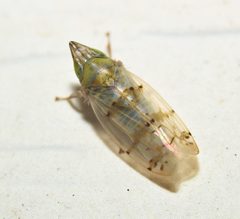
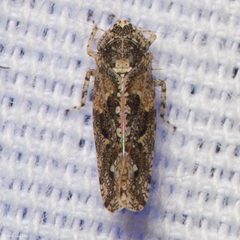
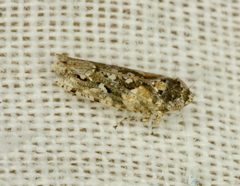
Pronunciation
How to pronounce Opsiini: /ɒpˈsaɪɪniː/
These audio files are automatically generated. While they are not always 100% accurate, they are a good starting point.
Identification
Opsiini leafhoppers can be distinguished from other Deltocephalinae tribes by a combination of genitalic characters, particularly features of the male and subgenital plates. Within the tribe, subtribes are differentiated by specific morphological traits: Eremophlepsiina includes with apically denticulate aedeagal shafts and reduced macrosetae on male subgenital plates. -level identification in some genera requires examination of male vibrational calling signals, as cryptic species may be morphologically indistinguishable by traditional genitalic characters alone. The 2nd valvulae of the ovipositor may provide diagnostic characters for distinguishing certain species pairs.
Images
Habitat
Arid and semi-arid environments including semi-deserts, deserts, mixed-grass steppes, and steppe-forest transition zones. Some penetrate into low mountains and forest zones. The tribe shows particular association with continental interior climates in the Palearctic region.
Distribution
Palearctic region, with concentration in Russia, Kazakhstan, Central Asia, and extending into China (Yunnan, Guangxi). Distribution spans from European Russia through the Lower Volga region to Central Asian republics and the Oriental region of southern China.
Host Associations
- Alhagi spp. - plantcamel thorn; specific to Pseudophlepsius binotatus
- Glycyrrhiza spp. - plantspecific to Pseudophlepsius abdykulovi
- Caragana sp. - plantspecific to Pseudophlepsius abdykulovi
- Halimodendron halodendron - plantspecific to Pseudophlepsius abdykulovi
- Hamaecytisus ruthenicus - plantspecific to Pseudophlepsius septentrionalis
- Calophaca soongorica - plantspecific to Pseudophlepsius septentrionalis
Behavior
Males produce -specific vibrational calling signals transmitted through plant substrates for mate attraction and species recognition. serves as the primary mechanism for reproductive isolation in cryptic , with signal divergence occurring independently of morphological change. This vibrational signaling has been documented in the Pseudophlepsius binotatus complex and the Neoaliturus fenestratus species group.
Ecological Role
Herbivorous insects associated with Fabaceae plants in arid and semi-arid . Specific ecological functions within these plant have not been quantified.
Similar Taxa
- Other Deltocephalinae tribesOpsiini is distinguished within Deltocephalinae by specific combinations of male genitalic characters and subtribal organization; precise differentiation requires examination of aedeagal and subgenital plate
More Details
Taxonomic history
The scope of Opsiini was substantially revised by Zahniser & Dietrich (2013), which expanded the tribe to include approximately 36 and reorganized the classification into four subtribes.
Subtribal classification
Four subtribes are recognized: Achaeticina Emeljanov, 1962; Circuliferina Emeljanov, 1962; Eremophlepsiina Dmitriev, 2006; and Opsiina Emeljanov, 1962. Subtribe Eremophlepsiina is the most recently established (2006) and includes the Chinese Odonaellus.
Species complex research
Opsiini has become a focal group for studies of cryptic diversification, with multiple species groups (Pseudophlepsius binotatus complex, Neoaliturus fenestratus group) demonstrating that acoustic signal divergence precedes or accompanies speciation while morphological stasis is maintained.
Sources and further reading
- BugGuide
- Wikipedia
- iNaturalist taxon
- NCBI Taxonomy
- Catalogue of Life
- Pseudophlepsius binotatus (Signoret, 1880) sensu lato (Hemiptera: Cicadellidae: Deltocephalinae: Opsiini) is a complex of biological species
- Review of the Neoaliturus fenestratus (Herrich-Schäffer, 1834) species group (Homoptera: Auchenorrhyncha: Cicadellidae: Deltocephalinae: Opsiini) from Russia, Kazakhstan, and Central Asia
- A new genus and two new species of Opsiini leafhoppers (Hemiptera, Cicadellidae, Deltocephalinae) from China, with a key to genera.