
Memnonia
Ball, 1900
Species Guides
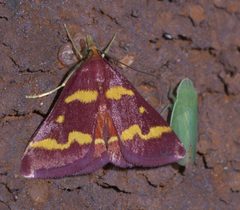
14Memnonia is a of leafhoppers ( Cicadellidae) in the Deltocephalinae, established by Ball in 1900. The genus belongs to the tribe Hecalini and is placed in the subtribe Hecalina. As with other deltocephaline leafhoppers, members of this genus are plant-feeding insects with . The genus has been documented in entomological collections and has 386 observations recorded on iNaturalist, indicating it is not uncommon in suitable .
Pronunciation
How to pronounce Memnonia: //mɛmˈnoʊniə//
These audio files are automatically generated. While they are not always 100% accurate, they are a good starting point.
Images
Misconceptions
The name 'Memnonia' has been applied to multiple unrelated entities, creating potential confusion. In addition to this leafhopper , 'Memnonia' or 'Memnonium' refers to: (1) a quadrangle and geological feature system (Memnonia Fossae) on Mars; (2) historical names for Egyptian monuments including the Ramesseum at Thebes; (3) a defunct health institute in Ohio; and (4) unrelated including a spider (Castianeira memnonia), a fruit fly (Bactrocera memnonia), a plant (Rhynchosia memnonia), and a fungal genus (Memnonium). These homonyms share no biological relationship with the leafhopper genus.
More Details
Taxonomic placement
Memnonia is classified in the tribe Hecalini, subtribe Hecalina within Deltocephalinae. This placement indicates affinity with other hecaline leafhoppers, though specific diagnostic features distinguishing Memnonia from related in this group are not well-documented in available sources.
Etymology
The name likely derives from Memnon, a figure from Greek mythology (king of Ethiopia, son of Eos), whose name was also applied to the 'Colossi of Memnon' in Egypt—two massive stone statues near Thebes. This mythological and geographical association appears to have influenced naming of both biological and geological features.