
Elymana
DeLong, 1936
Species Guides
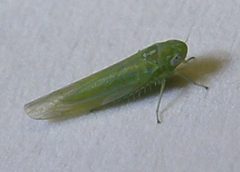
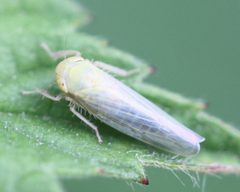
5Elymana is a of leafhoppers (Cicadellidae) established by DeLong in 1936. occur in Europe and North America, with at least one European species (E. sulphurella) introduced to North America. The genus includes grass-feeding species with documented plant associations in Poaceae. Taxonomic revisions have synonymized several previously described species.
Pronunciation
How to pronounce Elymana: /ɛˈlaɪmənə/
These audio files are automatically generated. While they are not always 100% accurate, they are a good starting point.
Identification
New World can be distinguished using morphological keys; E. sulphurella is distinguished from native North American relatives including E. circius (British Columbia to Saskatchewan) and E. pacifica (British Columbia). Specific diagnostic characters for -level identification are not provided in available sources.
Images
Habitat
Grassland associated with grasses; have been reared in controlled laboratory environments on various grass species.
Distribution
Europe (native range); North America (including introduced of E. sulphurella and native E. circius from British Columbia to Saskatchewan, E. pacifica in British Columbia). Distribution records from GBIF include Denmark, Norway, and Sweden.
Diet
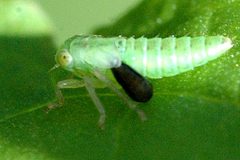
Phloem-feeding on grasses (Poaceae). Nymphs and feed on plant sap.
Host Associations
- Agrostis gigantea - food suitable for nymphs and
- Elymus glaucus - food suitable for nymphs and
- Festuca arundinacea - food suitable for nymphs and
- Festuca elatior - food suitable for nymphs and
- Festuca rubra - food suitable for nymphs and
- Phleum pratense - food suitable for nymphs and
- Lolium perenne - food suitable for nymphs only
- Alopecurus pratensis - food suitable for only
- Bromus inermis - food suitable for only
- Dactylis glomerata - food suitable for only
Life Cycle
, nymph, and stages. Eggs enter when laid and require several months to hatch at room temperature; cold treatment reduces minimum hatching time and shortens the hatching period. Developmental period averages 24.9 days for females and 23.5 days for males. Nymphs successfully developed on 10 of 11 plant tested, though numbers varied widely.
Behavior
Oviposition occurs preferentially on leaf blades rather than , with most deposited in the lower two-thirds of the leaf.
Ecological Role
Herbivore on grasses; potential plant- in grassland .
Human Relevance
E. sulphurella has been studied as a model for controlled rearing of leafhoppers and for understanding introduced establishment in North America.
Similar Taxa
- E. circiusNew World relative distinguished from E. sulphurella by morphological characters; occurs from British Columbia to Saskatchewan
- E. pacificaNew World relative distinguished from E. sulphurella by morphological characters; occurs in British Columbia