
Jikradia
Nielson, 1979
Species Guides
4- Jikradia brikelos
- Jikradia melanota
- Jikradia olitoria(Coppery Leafhopper)
- Jikradia sp-az
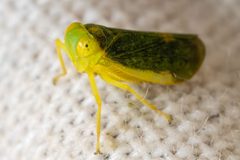
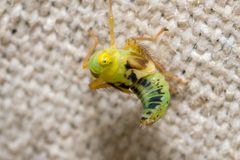
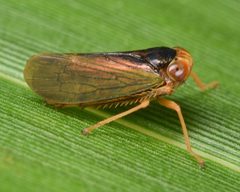
Jikradia is a of leafhoppers ( Cicadellidae) first described by Nielson in 1979. The genus contains over 20 described distributed across the Palaearctic and Nearctic regions, with records from North America, Central America, and the Old World. At least one species, Jikradia olitoria, has been identified as a putative of phytoplasmas causing North American Grapevine Yellows . The genus has undergone recent taxonomic revision with four new species described from Mesoamerica.
Pronunciation
How to pronounce Jikradia: /d͡ʒɪˈkrædiə/
These audio files are automatically generated. While they are not always 100% accurate, they are a good starting point.
Images
Habitat
Vineyard agroecosystems and adjacent vegetation; includes grapevines, vineyard floor, headlands, mixed vegetation near vineyards, and mixed shrub/woodland within 100m of cultivated areas. Seasonal movement into vineyard edges documented for at least one .
Distribution
Nearctic: eastern United States (Virginia, Pennsylvania, North Carolina, Vermont), Mesoamerica (Guatemala, Belize, Rica). Palaearctic: Old World records exist with first introduction to Old World reviewed in taxonomic literature.
Seasonality
active May through October; seasonal movement into vineyard edges observed during growing season.
Diet
Phloem-feeding on plants; demonstrated feeding on artificial sucrose solutions. At least one acquires phytoplasmas from grapevine (Vitis vinifera) and maintains latency on barley (Hordeum vulgare) and white clover (Trifolium repens).
Host Associations
- Vitis vinifera - source of phytoplasma acquisitiongrapevine cultivars including Chardonnay, Cabernet Sauvignon, Riesling, Tannat
- Hordeum vulgare - latency period maintenance barley used in laboratory rearing
- Trifolium repens - latency period maintenance white clover used in laboratory rearing
Life Cycle
21-day latency period required for phytoplasma to become transmissible in at least one ; stage present from May to October.
Behavior
Seasonal movement into vineyard edges; probing through artificial when light-oriented.
Ecological Role
Putative of 'Candidatus Phytoplasma pruni'-related NAGYIIIβ phytoplasma strain causing North American Grapevine Yellows ; potential disease vector in vineyard agroecosystems.
Human Relevance
Agricultural pest significance: Jikradia olitoria is the first potential insect identified for phytoplasmas associated with North American Grapevine Yellows, a affecting grape production. Vector status remains putative as transmission to healthy plants has not been demonstrated.
Similar Taxa
- Scaphoideus titanusExhibits similar seasonal movement patterns into vineyard edges and is a known phytoplasma , distinguished by different -level and
- Osbornellus auronitensShows comparable seasonal vineyard edge movement patterns, differentiated by assignment and morphological characters
More Details
Taxonomic history
established by Nielson in 1979; four new described from Mesoamerica in 2014 (J. dentata, J. trispinata, J. variabilis, J. exilis); Belize represents first genus record for that country
Vector research significance
J. olitoria was the only among 49 leafhopper species screened that released phytoplasmas into artificial feeding solutions; all detected phytoplasmas were NAGYIIIβ strains with no NAGYI-B detected; molecular confirmation by sequencing of three genomic regions
Sources and further reading
- BugGuide
- Wikipedia
- GBIF taxonomy match
- iNaturalist taxon
- NCBI Taxonomy
- Catalogue of Life
- New leafhopper species of Jikradia from Mesoamerica with new records, revised key to species, distribution, origin, and checklist (Hemiptera: Cicadellidae: Coelidiinae: Teruliini)
- Jikradia olitoria([Hemiptera]:[Cicadellidae]) Transmits the Sequevar NAGYIIIβ Phytoplasma Strain Associated with North American Grapevine Yellows in Artificial Feeding Assays