
Pacarina
Distant, 1905
Little Specklewings
Species Guides
2- Pacarina puella(little mesquite cicada)
- Pacarina shoemakeri(Little Juniper Cicada)
Pacarina is a of cicadas in the Cicadidae, distributed in the Neotropical region. The genus remained poorly known until 2020, when the first definitive plant and rearing records were published. Twenty-nine emerged from the soil of a potted Dracaena trifasciata plant in Panama, revealing that nymphs develop underground feeding on host plant roots. These reared specimens likely represent an undescribed species, highlighting how much remains unknown about this genus.
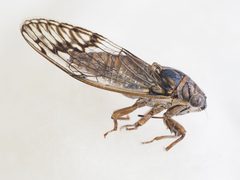
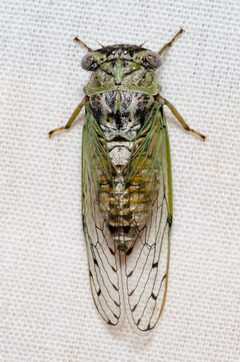
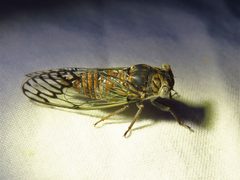
Pronunciation
How to pronounce Pacarina: /pɑː.kəˈriː.nə/
These audio files are automatically generated. While they are not always 100% accurate, they are a good starting point.
Images
Habitat
Nymphal development occurs in soil associated with plant roots. The only documented rearing event involved potted plants in an urban/suburban setting in Panama, though the presumably occurs in natural Neotropical as well.
Distribution
Neotropical region. Documented from Arraiján, Republic of Panama (specific locality: Loma del Río). Broader distribution within the Neotropics is discussed in the literature but not precisely defined.
Diet
Xylem-feeding on roots of plants during nymphal development. Specific dietary breadth unknown beyond the single documented host association.
Host Associations
- Dracaena trifasciata - root-feeding First and only documented plant for the ; rearing confirmed from potted plant soil in Panama
Life Cycle
Nymphs develop underground in soil, feeding on plant roots. emerge from soil. Mass events have been documented, with 29 adults emerging from a single potted plant over an extended period.
Behavior
exhibit mass from soil substrate. The documented emergence occurred from late December through January, suggesting possible seasonal timing, though this may reflect local climate conditions rather than a fixed phenological pattern.
Human Relevance
Documented rearing from ornamental potted plants (Dracaena trifasciata, commonly known as snake plant or mother-in-law's tongue) suggests potential for incidental human encounter in urban and suburban settings. No economic or ecological impacts have been documented.
Similar Taxa
- Other Neotropical cicada genera in tribe FidicininiPacarina belongs to the tribe Fidicinini; differentiation from other in this tribe requires examination of genitalia and wing venation characters, which are not detailed in available literature
Sources and further reading
- BugGuide
- Wikipedia
- GBIF taxonomy match
- iNaturalist taxon
- NCBI Taxonomy
- Catalogue of Life
- Eumastacidae | Beetles In The Bush
- First host plant record for Pacarina (Hemiptera, Cicadidae)
- Figure 2 from: Aiello A, Stucky BJ (2020) First host plant record for Pacarina (Hemiptera, Cicadidae). Neotropical Biology and Conservation 15(1): 77-88. https://doi.org/10.3897/neotropical.15.e49013
- Figure 1 from: Aiello A, Stucky BJ (2020) First host plant record for Pacarina (Hemiptera, Cicadidae). Neotropical Biology and Conservation 15(1): 77-88. https://doi.org/10.3897/neotropical.15.e49013