
Anafroptilum asperatum
Anafroptilum asperatum is a of in the Baetidae. The Anafroptilum comprises small to medium-sized mayflies distributed primarily in the Afrotropical region. This species is distinguished by morphological features of the and nymphal stages, though detailed documentation remains limited. It belongs to a group of Baetidae characterized by reduced or modified mouthparts in the adult stage, reflecting the non-feeding nature of adult mayflies.
Pronunciation
How to pronounce Anafroptilum asperatum: /ˌænəfˈɹɒptɪləm æsˈpɛrətəm/
These audio files are automatically generated. While they are not always 100% accurate, they are a good starting point.
Identification
Diagnostic features likely include details of the male genitalia, particularly the shape and armature of the penes and forceps, which are primary characters for discrimination in Baetidae. The 'asperatum' indicates roughened structures that may serve as a distinguishing character from . Nymphal identification would rely on gill , labial and maxillary palp structure, and tarsal claw . Examination of type material or original species description is required for definitive identification.
Images
Appearance
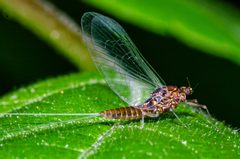
are small to medium-sized mayflies with the general body plan typical of Baetidae: slender body, membranous wings with reduced venation, and long, thread-like . The specific epithet 'asperatum' suggests roughened or textured surface features, likely referring to microsculpturing on the , wing bases, or genitalia. Nymphs (larvae) possess streamlined, dorsoventrally flattened bodies adapted for clinging in lotic environments, with gills located on abdominal segments.
Habitat
As a member of Baetidae, nymphs inhabit freshwater lotic environments including streams and rivers, where they occupy rocky or gravel substrates. are aerial and found near water bodies during periods.
Distribution
The Anafroptilum is primarily Afrotropical in distribution. Specific locality data for A. asperatum is sparse; the single iNaturalist observation suggests limited documentation. The likely occurs in sub-Saharan African freshwater systems.
Diet
Nymphs are herbivorous-, grazing on periphyton and fine particulate organic matter. do not feed; the alimentary canal is .
Life Cycle
Hemimetabolous development with aquatic nymphal stages and terrestrial/aerial stage. Nymphs undergo multiple instars before emerging as subimagos (dun stage), which to reproductive imagos (spinners). Specific voltinism (number of per year) is unknown.
Behavior
form mating swarms, typically near water at dusk. Males use their long forelegs to grasp females during copulation. Adults are short-lived, surviving only hours to days.
Ecological Role
Nymphs serve as primary consumers in aquatic , transferring energy from and detritus to higher . They are important prey for fish and aquatic . contribute to terrestrial food webs and nutrient transfer between aquatic and riparian .
Human Relevance
Similar Taxa
- Other Anafroptilum species share general and Afrotropical distribution; require examination of male genitalia and nymphal mouthpart details for separation.
- Other Baetidae genera (e.g., Baetis, Cloeon)Overlap in size and ; distinguished by wing venation details, genital , and geographic distribution.
More Details
Taxonomic note
Anafroptilum was established to accommodate Afrotropical Baetidae previously assigned to other . The genus is distinguished by specific combinations of and nymphal characters, including details of the gonostylus and nymphal gill structure.
Data deficiency
This is known from extremely limited material. The single iNaturalist observation indicates that basic biological data—, geographic range, and ecological associations—remain undocumented.