
Acentrella
Bengtsson, 1912
small minnow mayflies
Species Guides
4- Acentrella feropagus
- Acentrella insignificans
- Acentrella nadineae(small minnow mayfly)
- Acentrella turbida
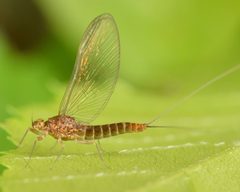
Acentrella is a of small minnow mayflies in the Baetidae. The genus contains at least 26 distributed across Europe, North America, Asia, and Africa. Nymphs of at least some species inhabit cool, clean, swift rocky streams. stages of several species remain undescribed due to the difficulty of rearing nymphs to maturity.

Pronunciation
How to pronounce Acentrella: /ˌæsɛnˈtrɛlə/
These audio files are automatically generated. While they are not always 100% accurate, they are a good starting point.
Identification
Distinguished from other Baetidae by a combination of genitalic and wing venation characters; specific diagnostic features require examination and reference to taxonomic keys. The genus is part of the diverse Baetidae , and -level identification is challenging without reared specimens or associated nymphal and material.
Images
Habitat
Nymphs inhabit cool, clean, swift rocky streams. At least one (A. nadineae) occupies streams with rocky substrates where near final instar nymphs exhibit specialized microhabitat use.
Distribution
Recorded from Europe, North America, and Asia, with a few from Africa. In North America, A. nadineae is broadly distributed across parts of the southeastern, northeastern, and midwestern United States.
Life Cycle
Hemimetabolous with aquatic nymphal stages and terrestrial stages. Nymphs develop through multiple instars. Near final instar nymphs of A. nadineae exhibit distinctive behavioral modifications. Rearing nymphs to the stage is difficult but has been achieved with modified systems.
Behavior
Near final instar nymphs of A. nadineae exhibit madicolous —living in thin water films on wet rocks. This represents an unusual microhabitat specialization for this developmental stage.
Ecological Role
Aquatic insect component of rocky stream . As a baetid , nymphs likely contribute to benthic and serve as prey for fish and other aquatic .
Human Relevance
Used as indicators of water quality due to association with cool, clean streams. The difficulty of rearing specimens has limited complete documentation, which affects taxonomic and ecological study.
Similar Taxa
- Other Baetidae generaAcentrella shares the general 'small minnow mayfly' with numerous other Baetidae ; differentiation requires examination of genitalic structures and wing venation.
- Acentrella species within the are difficult to distinguish without associated nymphal and material or reared specimens.
More Details
Taxonomic challenges
The difficulty of rearing Acentrella nymphs to adulthood has resulted in many being described from nymphs alone, with stages remaining unknown. A modified rearing system was developed specifically to obtain adult A. nadineae for description.
Madicolous behavior
The madicolous observed in A. nadineae nymphs—living in thin water films on wet rocks—is unusual for near final instar mayflies and represents a specific microhabitat .