
Ephemera simulans
Walker, 1853
Brown Drake
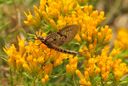
Ephemera simulans is a burrowing in the Ephemeridae, commonly known as the Brown Drake. It is widely distributed across North America, particularly common in the Rocky Mountains, Midwest, and Great Lakes region. The species is economically significant in recreational fly fishing, where both nymph and stages are imitated with artificial flies. Nymphs inhabit sand and silt substrates of lakes and streams, emerging as adults primarily at night from mid-June to mid-July.

Pronunciation
How to pronounce Ephemera simulans: /ɛˈfɛmərə sɪˈmjʊlænz/
These audio files are automatically generated. While they are not always 100% accurate, they are a good starting point.
Identification
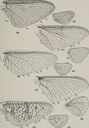
Distinguished from the closely related Green Drake (Ephemera guttulata) by timing and overlap rather than ; the two frequently co-occur in trout streams with simultaneous hatches. identified by upright wing posture after mating, which fish selectively target over outstretched-wing individuals. Artificial fly patterns emphasize silhouette and presentation over exact color matching. The "Brown Drake" is shared with Hexagenia atrocaudata, requiring care in identification context.
Images
Habitat
Freshwater lakes and streams with sand and silt bottoms. Nymphs burrow in clay, silt, sand, and gravel substrates, showing preference for mixed matrix bottoms over pure silt/clay. Documented from lacustrine environments including Dauphin Lake, Manitoba and Lake Wawasee, Indiana, as well as flowing trout streams in the Rocky Mountains and Midwest.
Distribution
North America: widespread across the United States including the Rocky Mountains, Midwest, and Great Lakes region. Most common in Ephemeridae in North America. Documented occurrences in Vermont, Manitoba, and Indiana. hatches reported from Skaneateles Lake, New York.
Seasonality
emerge from mid-June to mid-July. Both hatching and mating occur at night. Nymphs present year-round in substrates.
Life Cycle
Behavior
Nymphs are burrowers, constructing and occupying U-shaped tunnels in sand and silt. involves nymphs rising from substrates and riding the water surface, making them highly vulnerable to during this stage. hold wings upright after mating, a posture that increases predation risk from fish. Mating and hatching both occur nocturnally.
Ecological Role
Important component of benthic production in freshwater . production estimates from Dauphin Lake, Manitoba ranged from 9.02 to 9.90 g/m² (wet weight). Serves as significant prey for trout, bass, perch, rock bass, Atlantic salmon, and bullheads. High vulnerability during makes it a critical food source for sport fish.
Human Relevance
Nationally important for recreational fly fishing on premier trout streams. Artificial nymph patterns include the Wiggle Nymph, Marabou Nymph, and Feather Duster nymph. patterns emphasize silhouette and presentation over color . Attracts anglers regionally, with fishermen traveling to Central New York specifically for Skaneateles Lake hatches.
Similar Taxa
- Ephemera guttulata (Green Drake)Co-occurs in trout streams with simultaneous hatches; similar and use, distinguished by reference and potentially coloration, though exact morphological differences not specified in sources.
- Hexagenia atrocaudataShares "Brown Drake," creating identification confusion; different within same order.
More Details
Production Research
Subject of fisheries production studies in Dauphin Lake, Manitoba, where preservation methods (10% formalin followed by 75% ethanol) were found to cause 25% weight loss in related Hexagenia limbata, affecting estimates.
Life History Research
duration historically unresolved; addressed in dedicated study from Lake Wawasee, Indiana (1948), building on prior work by Ide (1935) on nymph instars.
Sources and further reading
- BugGuide
- Wikipedia
- GBIF taxonomy match
- iNaturalist taxon
- NCBI Taxonomy
- Catalogue of Life
- Bohart Bugs Beckon at Vacaville Museum's Exhibit | Bug Squad
- Bohart Museum Spotlight on Yellow-Bellied Burying Beetles | Bug Squad
- Teach a Man to Fish (and some entomology) and You’ll Feed Him for a Lifetime
- Snap to it and bag a bagworm! - Thyridopteryx ephemeraeformis — Bug of the Week
- It’s a Mayfly…It’s a Moth…It’s Thyridopteryx | Beetles In The Bush
- Melanthiaceae | Beetles In The Bush
- THE LIFE HISTORY OF EPHEMERA SIMULANS WALKER IN LAKE WAWASEE
- Production of Hexagenia limbata (Serville) and Ephemera simulans Walker (Ephemeroptera) in Dauphin Lake, Manitoba, with a Note on Weight Loss due to Preservatives