
Paracladura trichoptera
(Osten Sacken, 1877)
winter crane fly
Paracladura is a of winter crane fly in the Trichoceridae, order Diptera. It was originally described as Trichocera trichoptera by Osten Sacken in 1877. Winter crane flies are a small family of slender, long-legged flies that are active during cooler months, distinguishing them from most other crane flies. The family Trichoceridae is considered primitive within Diptera and is closely related to the Tipulidae (true crane flies).
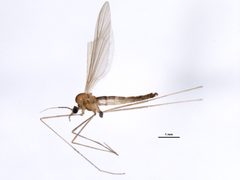
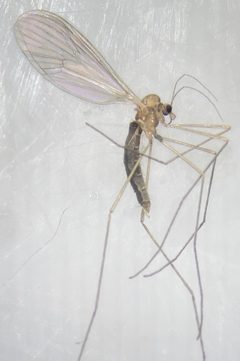
Pronunciation
How to pronounce Paracladura trichoptera: //ˌpærəˈklædjʊrə traɪˈkɒptərə//
These audio files are automatically generated. While they are not always 100% accurate, they are a good starting point.
Identification
Members of the Paracladura can be distinguished from other winter crane fly genera by wing venation and genitalic characters. The Trichoceridae is distinguished from Tipulidae by having ocelli present on the and a more slender, delicate build. -level identification requires examination of male genitalic structures.
Images
Seasonality
Winter crane flies ( Trichoceridae) are active during cooler months, with typically emerging in late autumn through early spring. This seasonal pattern distinguishes them from most other Diptera.
Life Cycle
Larvae of Trichoceridae develop in decaying wood, leaf litter, or other organic matter. emerge during winter months when temperatures are above freezing.
Ecological Role
Larvae contribute to decomposition of organic matter. may serve as early-season food sources for when few other insects are active.
Similar Taxa
- Tipulidae (true crane flies)Larger, more robust body; lack ocelli; active primarily in spring and summer rather than winter
- Other Trichoceridae generaRequire examination of wing venation and genitalia for reliable separation
More Details
Taxonomic history
Originally described in the Trichocera, later transferred to Paracladura. The basionym Trichocera reflects this taxonomic change.
Phylogenetic position
Trichoceridae is considered one of the most primitive of Diptera, sharing characteristics with both and . Their winter activity is thought to be a retained ancestral trait.