
Dolichopeza carolus
Alexander, 1940
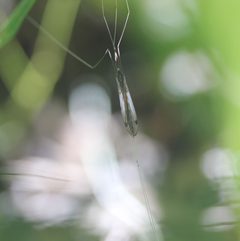
Dolichopeza carolus is a of large crane fly in the Tipulidae. It belongs to the Dolichopeza, a group characterized by exceptionally elongated legs and bodies among crane flies. The species was described by Charles Paul Alexander in 1940. It is distributed across eastern North America.
Pronunciation
How to pronounce Dolichopeza carolus: //ˌdɒlɪkoʊˈpiːzə kəˈroʊləs//
These audio files are automatically generated. While they are not always 100% accurate, they are a good starting point.
Identification
As a member of the Dolichopeza, this likely exhibits the genus's characteristic extreme leg elongation, with legs often exceeding body length several times over. Specific diagnostic features distinguishing D. carolus from are not documented in available sources. Identification to species level requires examination of male genitalia and wing venation patterns by a .
Images
Distribution
Eastern North America: Canada (Ontario, Quebec, Newfoundland), United States (south to Wisconsin, Tennessee, and Florida). Vermont records confirmed. Nearctic region.
Similar Taxa
- Other Dolichopeza speciesCongeneric share the characteristic extremely elongated legs and slender body form, requiring examination of genitalia and wing venation for definitive separation.
- Tipula speciesLarge crane flies in the related Tipula may appear similar in general habitus, but Dolichopeza have proportionally much longer legs and more slender bodies.
More Details
Etymology
The specific epithet 'carolus' likely honors Carolus Linnaeus (1707–1778), the Swedish naturalist who established modern , or may reference a person named Carolus associated with the type locality or collection.
Taxonomic authority
Described by Charles Paul Alexander (1889–1981), the foremost authority on crane flies (Tipulidae) of the 20th century, who described over 10,000 in the order Diptera.