
Ctenophorinae
Phylum Guides
3- Ctenophora(comb jellies)
- Phoroctenia
- Tanyptera
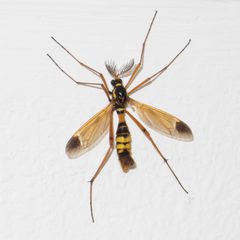
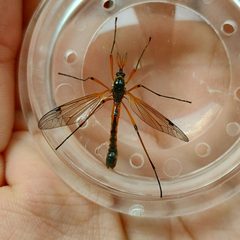
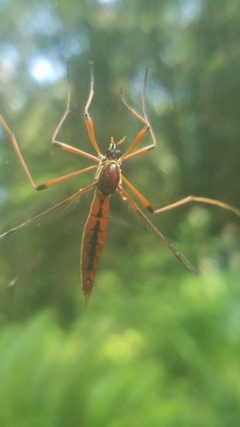
Ctenophorinae is a of true crane flies (Tipulidae) characterized by large body size and vivid coloration compared to other crane flies. The subfamily includes five : Ctenophora, Dictenidia, Phoroctenia, Pselliophora, and Tanyptera. Members are distinguished by structural features of the and wing venation. These crane flies are primarily found in forested across the Northern Hemisphere.
Pronunciation
How to pronounce Ctenophorinae: /ˌktɛnəˈfɔrɪniː/
These audio files are automatically generated. While they are not always 100% accurate, they are a good starting point.
Identification
Distinguished from other Tipulidae by the presence of pectinate (comb-like) in males, particularly pronounced in Ctenophora. Wing venation includes a well-developed and specific branching patterns of the radial . Large size and bold coloration separate Ctenophorinae from the generally smaller, drabber Limoniinae. Tanyptera lack pectinate antennae but share other wing characters. Separation from Tipulinae requires examination of antennal structure and wing vein details.
Images
Appearance
Large-bodied crane flies with striking color patterns, often featuring black and yellow or orange markings. possess a distinctive comb-like (pectinate) structure in males of some , particularly Ctenophora. Wings are elongated with characteristic venation patterns including a distinct . Body length typically exceeds 15 mm, with some among the largest crane flies in North America and Eurasia. Legs are long and slender relative to body size.
Habitat
Primarily associated with mature deciduous and mixed forests. Larval development occurs in decaying wood, particularly in moist, rotting hardwood logs and stumps. are found in woodland edges, forest clearings, and along streams within forested landscapes. Require with sufficient dead wood substrate for larval development.
Distribution
Holarctic distribution, with primary diversity in the Palearctic region. Well-represented in Europe, eastern Asia, and North America. Individual show distinct patterns: Ctenophora and Tanyptera widespread across the Holarctic; Dictenidia primarily European; Phoroctenia and Pselliophora with more restricted ranges in eastern Asia and western North America.
Seasonality
activity concentrated in spring and early summer, with peak typically April through June in temperate regions. Some exhibit extended periods into late summer. Timing varies with latitude and elevation, with earlier emergence at lower elevations and southern ranges.
Life Cycle
Larvae develop in decaying hardwood, feeding on decomposing wood and associated microorganisms. Developmental period spans one to three years depending on and environmental conditions. occurs within the wood substrate. do not feed and have short lifespans, typically one to two weeks.
Behavior
are and active in sunny conditions, frequently observed resting on tree trunks or foliage. Males use pectinate to detect female . is slow and deliberate compared to smaller crane flies. Adults are infrequently attracted to artificial light. Mating occurs on vegetation, with males often forming small near sites.
Ecological Role
Larvae contribute to wood decomposition and nutrient cycling in forest . Serve as prey for forest-dwelling birds, spiders, and predatory insects. provide food for during spring periods. Role as is minimal due to non-feeding adult stage.
Human Relevance
Occasionally encountered by foresters and hikers but of no economic importance. sometimes mistaken for large mosquitoes but are harmless. Some , particularly Ctenophora species, are featured in entomological collections due to their size and coloration. Larval requirements make them potential indicators of old-growth forest conditions.
Similar Taxa
- TipulinaeSimilar large size but distinguished by simple (non-pectinate) in all sexes and different wing venation patterns.
- LimoniinaeMost crane flies belong here but are generally smaller, with drabber coloration and more delicate build; antennal structure differs.
- CylindrotomidaeHistorical confusion due to similar appearance; separated by larval (herbaceous plants vs. decaying wood) and wing venation.
More Details
Historical taxonomy
The has undergone repeated revision, with some formerly placed in separate or subfamilies based on antennal structure. Molecular studies support current circumscription.
Conservation relevance
Dependent on dead wood that have declined in managed forests; some European of conservation concern due to old-growth forest loss.