
Elliptera
Schiner, 1863
Species Guides
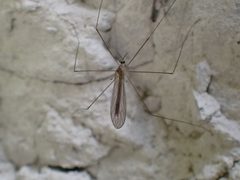
1Elliptera is a of crane flies in the Limoniidae, established by Schiner in 1863. The genus comprises ten described distributed across the Holarctic region, including North America, Europe, and East Asia. stages have been described for only a few species, with larvae inhabiting aquatic, hygropetric environments on wet rocks in mountainous areas.
Pronunciation
How to pronounce Elliptera: //ˌɛlɪpˈtɛrə//
These audio files are automatically generated. While they are not always 100% accurate, they are a good starting point.
Identification
Larvae can be distinguished to using morphological characters of the capsule, spiracular disc, and body setation; an identification key exists for East Asian larvae. are typical small to medium-sized limoniid crane flies; specific diagnostic characters for the require examination of wing venation and genitalia.
Images
Habitat
Aquatic, hygropetric (wet-rock) in mountainous regions. Larvae occur in madicolous environments where thin films of water flow over rock surfaces.
Distribution
Holarctic distribution: North America (Colorado, Tennessee, Illinois), Europe (Hungary), and East Asia (South Korea, Mongolia, China, Japan).
Life Cycle
Holometabolous. Larval and pupal stages described for E. jacoti, E. zipanguensis, and E. mongolica; previously only E. omissa immatures were known for the . Larvae are aquatic and occurs in the same hygropetric .
Similar Taxa
- Other Limoniidae generaElliptera larvae are distinguished from other limoniid by combinations of capsule patterns, spiracular disc structure, and body setation; separation requires detailed examination of wing venation and male terminalia.
More Details
Species diversity
Ten currently recognized: E. astigmatica, E. clausa, E. coloradensis, E. hungarica, E. illini, E. jacoti, E. omissa, E. tennessa, E. usingeri, and E. zipanguensis. A new species, E. mongolica, was described in 2021 based on larval and COI barcodes.
Research significance
The 2021 study by Podeniene, Podenas & Gelhaus represented the first detailed description for East Palaearctic Elliptera and established molecular methods for associating larvae with in this .