
Antocha
Osten Sacken, 1860
Species Guides
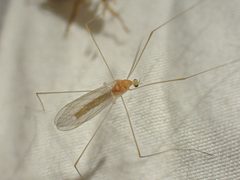
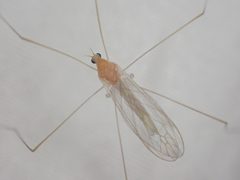
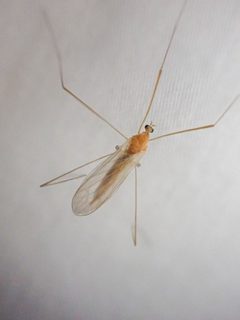
2Antocha is a of crane flies (Limoniidae) comprising approximately 161 across three subgenera. The genus is globally distributed with highest diversity in the Oriental (83 species) and East Palearctic (53 species) regions. Larvae are aquatic and rheophilic, inhabiting fast-flowing streams and rivers where they construct silken tubes on submerged rocks. The genus exhibits notable sensitivity to hydrological disturbances, making it a potential indicator of stream health.
Pronunciation
How to pronounce Antocha: /ænˈtoʊkə/
These audio files are automatically generated. While they are not always 100% accurate, they are a good starting point.
Identification
Distinguished from related such as Geranomyia by larval : Antocha larvae lack and respire cutaneously. identification relies heavily on male genitalia structure, especially the outer gonostylus and shape. The subgenus Antocha (Antocha) is characterized by the specific arrangement of male terminalia with elongate gonocoxite and paired terminal gonostyli.
Images
Habitat
Larvae are strictly aquatic and rheophilic, developing in riffles, gravel, or detritus of fast-running streams and rivers. They construct silken tubes on submerged rocks. occur near water margins, often aggregating along shorelines. Specific microhabitats include partially submerged rocks in flowing water and -covered surfaces used for oviposition.
Distribution
Nearly distribution across all zoogeographical regions. Highest in Oriental region (83 ) and East Palearctic (53 species). Lower representation in Afrotropics (21 species), Nearctic (7 species), Australasian/Oceanian (3 species), and Neotropics (1 species). West Palearctic subgenus Antocha (Antocha) includes four species: A. (A.) hirtipes (Georgia), A. (A.) libanotica (Caucasus to Central Asia), A. (A.) phoenicia (Lebanon), and widespread A. (A.) vitripennis. Recent records document first African occurrence from Middle Atlas Range, Morocco.
Seasonality
present near larval sites at water margins. Peak adult activity observed late May to early July in Japanese (A. bifida).
Diet
Larvae are primarily detritivorous, feeding on organic particles filtered from flowing water within their silken tubes.
Host Associations
- Sperchon plumifer - Water mite larvae parasitize A. bifida; 9.5% rate observed in Shinano River, Japan, with mean 3.5 mites per (maximum 40). 73.1% of mites attach to . peaks late May to early July, declining after flood events.
Life Cycle
Larvae aquatic and apneustic (lacking functional ), respiring cutaneously through body surface. Development occurs in flowing water . emerge and remain near water margins. Specific details on , larval instars, pupal stage, and adult longevity not documented.
Behavior
attracted to light and captured in . Females aggregate along waterlines to oviposit on -covered surfaces. One documented case of large numbers trapped by glandulous leaves of butterwort (Pinguicula spp.) near river margins in Spain. Mate-clasping reported in subgenus Orimargula.
Ecological Role
Component of aquatic in fast-flowing stream . Larval detritivory contributes to organic matter processing in lotic systems. Co-occurs with diverse aquatic including caddisfly Tinodes atlasensis, freshwater gastropod Pseudamnicola bouhaddiouii, and various Ephemeroptera, Trichoptera, and Odonata . Sensitivity to hydrological extremes indicates potential role as bioindicator for stream flow regime stability.
Human Relevance
Potential bioindicator for climate change impacts on freshwater . declines documented following flood events, demonstrating vulnerability to hydrological alterations. Conservation concern for range-restricted in regions with declining water reserves, such as the Middle Atlas Range, Morocco.
Similar Taxa
- GeranomyiaRelated limoniid distinguished by larval : Geranomyia larvae possess , whereas Antocha larvae are apneustic with cutaneous respiration.
More Details
Hydrological sensitivity
within this are particularly sensitive to changes in river flow. Climate change-driven alterations, including increased frequency or intensity of floods, reduce larval and overall productivity. Unusually strong floods in the Shinano River basin, Japan, caused substantial decline in crane fly secondary production, highlighting vulnerability to hydrological extremes.
Taxonomic complexity
The widespread A. (A.) vitripennis exhibits high intraspecific morphological variability in male genital structures across geographically distant , complicating species delineation. In contrast, range-restricted species such as A. (A.) phoenicia and A. (A.) staryi display consistent and distinctive male terminalia.
Sources and further reading
- BugGuide
- Wikipedia
- GBIF taxonomy match
- iNaturalist taxon
- NCBI Taxonomy
- Catalogue of Life
- New Antocha Osten Sacken (Diptera: Limoniidae) from Sichuan, China
- Taxonomic notes and key to the West Palearctic Antocha (Antocha) Osten Sacken, 1860 (Diptera, Limoniidae) with description of a new species from Morocco
- Taxonomic notes and key to the West Palearctic Antocha (Antocha) Osten Sacken, 1860 (Diptera, Limoniidae) with description of a new species from Morocco
- New species of Antocha Osten Sacken, 1860 crane flies (Diptera: Limoniidae) for South Korea
- A new species of Antocha Osten Sacken, 1860 (Diptera: Limoniidae) from Sichuan, China
- A new species of Antocha (subgenus Orimargula) from Sulawesi (Diptera: Tipulidae) and its mate-clasping behavior
- The life cycle, food habits and production ofAntocha saxicolaO.S. (Diptera: Tipulidae)
- Parasite Infestation of Antocha (Antocha) bifidaAlexander, 1924 (Diptera: Tipulidae) by Water Mite Larvae (Sperchon plumiferThor, 1902) in the Middle Reaches of the Shinano River, Central Japan
- New records and a new species of the subgenus Antocha (Antocha) Osten Sacken, 1860 (Diptera, Limoniidae) from Northwest China.