
Strauzia
Robineau-Desvoidy, 1830
Sunflower maggot flies
Species Guides
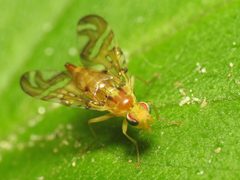
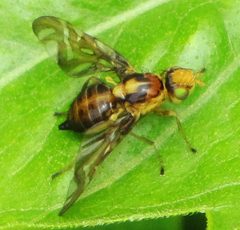
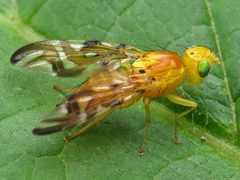
5Strauzia is a of fruit flies in the Tephritidae, first described by Robineau-Desvoidy in 1830. The genus contains approximately 12 described , including the economically notable Strauzia longipennis (sunflower maggot), a pest of cultivated sunflower. Some species within the genus exhibit complex patterns of morphological variation and association that have led to taxonomic instability, with evidence suggesting incipient speciation in certain .
Pronunciation
How to pronounce Strauzia: /ˈstraʊziə/
These audio files are automatically generated. While they are not always 100% accurate, they are a good starting point.
Images
Distribution
North America, with records from Canada (Alberta, Manitoba, Ontario, Quebec) and widespread US states including Iowa, Illinois, Indiana, Kansas, Minnesota, Missouri, Nebraska, North Dakota, South Dakota, and others. One , Strauzia longipennis, has been recorded in Europe (Germany).
Host Associations
- Helianthus annuus - sunflower; of Strauzia longipennis
Human Relevance
Strauzia longipennis (sunflower maggot) is a pest of cultivated sunflower (Helianthus annuus), with larvae developing in the stems of plants.
More Details
Taxonomic Complexity
Strauzia longipennis exhibits notable morphological variability that has generated taxonomic confusion. Seven varieties were historically recognized, with three elevated to status. Research in eastern Iowa identified two sympatric mitochondrial lineages within S. longipennis that correspond to former varieties 'typica' and 'vittigera', suggesting these may represent races or incipient species.
Species Count
The includes approximately 12 described : S. arculata, S. bushi, S. gigantei, S. intermedia, S. longipennis, S. longitudinalis, S. noctipennis, S. perfecta, S. rugosa, S. stoltzfusi, S. uvedaliae, S. verbesinae, and S. vittigera.