
Gymnocarena
Hering, 1940
fruit flies
Species Guides
5- Gymnocarena bicolor
- Gymnocarena defoei
- Gymnocarena diffusa(Sunflower Receptacle Maggot)
- Gymnocarena norrbomi
- Gymnocarena tricolor
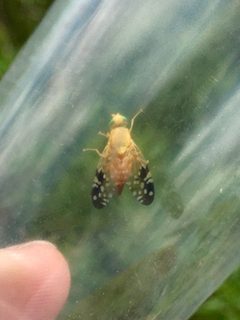
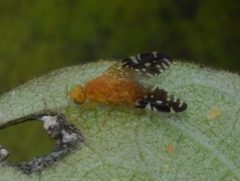
Gymnocarena is a of true fruit flies ( Tephritidae) comprising 19 described . Most species are native to North America, with one species (G. monzoni) recorded from Guatemala. Larvae develop within the of plants in the sunflower family (Asteraceae), feeding on developing seeds and acting as seed . Several species are associated with cultivated sunflower (Helianthus annuus) and can be agricultural pests. are characterized by patterned wings typical of tephritid fruit flies.
Pronunciation
How to pronounce Gymnocarena: /ˌdʒɪmnəˈkæɹɪnə/
These audio files are automatically generated. While they are not always 100% accurate, they are a good starting point.
Identification
Gymnocarena can be distinguished from other Tephritidae by genitalia and wing pattern characteristics; a revised key to species is provided in taxonomic literature. Species-level identification requires examination of male and female terminalia. The is placed in the tribe Xyphosiini based on morphological features. are generally pale with distinctive wing markings.
Images
Habitat
Associated with sunflower plants (Asteraceae); larvae develop within flower (capitula). Specific includes sunflower fields, native stands of Helianthus, and other Asteraceae vegetation. One (G. monzoni) occurs in Guatemala, expanding the known range beyond North America.
Distribution
North America (primary range), with records from eastern North America, the northern Great Plains (North Dakota), and Mississippi. Guatemala represents the southernmost known occurrence (G. monzoni). Distribution follows plants in the Asteraceae .
Seasonality
active in mid-summer; larval development coincides with sunflower flowering and seed development. Specific timing varies by and latitude.
Diet
Larvae feed on developing seeds within Asteraceae flower . have been observed feeding on extrafloral .
Host Associations
- Helianthus annuus - larval common sunflower; major agricultural
- Verbesina helianthoides - larval recorded for G. mississippiensis and G. norrbomi
- Verbesina alternifolia - larval recorded for G. norrbomi
- Verbesina virginica - larval undetermined Gymnocarena larvae recorded
- Viguiera cordata - larval recorded for G. monzoni; first Gymnocarena record in Viguiera
Life Cycle
Complete . are laid within sunflower , typically between bract layers or in developing florets. Larvae bore into the head and feed on developing seeds. Mature larvae exit the head, usually by chewing an exit hole, and drop to the ground. occurs in soil at depths greater than six inches, or occasionally within the sunflower head. emerge the following season.
Behavior
Larvae are seed that tunnel within sunflower , reducing seed yield and quality. females oviposit into developing flower heads. Larval feeding damage has been documented as a pest problem in commercial sunflower .
Ecological Role
Seed in Asteraceae-dominated . Acts as a natural control mechanism for native sunflowers; becomes a pest in agricultural contexts where sunflower is cultivated for seed and oil production.
Human Relevance
Several are recognized as pests of cultivated sunflower (Helianthus annuus), causing economic damage through larval feeding on developing seeds. The is of interest to agricultural entomologists in sunflower-growing regions of North America.
Similar Taxa
- Neotephritis finalisalso a tephritid fruit fly associated with sunflower; distinguished by oviposition on corollas of partially-opened florets rather than between bracts, and by having two per season
- Other Tephritinae generarequire examination of wing venation and genitalia for differentiation; Gymnocarena is placed in tribe Xyphosiini
More Details
Taxonomic history
The was established by Hering in 1940. Recent taxonomic work (2012) described three new and brought the total to 19 named species. plant records have expanded beyond Helianthus to include Verbesina and Viguiera genera.
Research gaps
Full details, voltinism, and complete range remain incompletely documented for most . The of many species is known only from limited geographic sampling.
Sources and further reading
- BugGuide
- Wikipedia
- GBIF taxonomy match
- iNaturalist taxon
- NCBI Taxonomy
- Catalogue of Life
- Bug Eric: More Insects From Sunflowers
- Biology and Ecology of Gymnocarena diffusa (Diptera: Tephritidae) on Sunflower in North Dakota1,2
- New species of Gymnocarena (Diptera: Tephritidae) from eastern North America and Guatemala, and the redescription of G. mississippiensis