
Boreothrinax
Steyskal, 1978
Species Guides
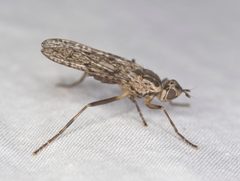
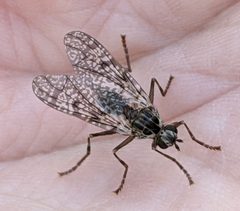
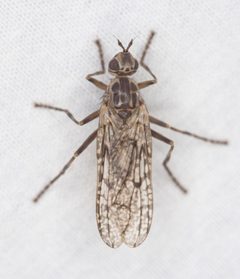
3Boreothrinax is a of flies in the Pyrgotidae, established by Steyskal in 1978. The genus is currently considered a synonym of Pyrgota by some sources, though this status remains uncertain. It contains five described distributed in North America.
Pronunciation
How to pronounce Boreothrinax: //ˌbɔːriˈoʊθraɪnæks//
These audio files are automatically generated. While they are not always 100% accurate, they are a good starting point.
Identification
in this can be distinguished from other Pyrgotidae by the combination of reduced wing venation and specific modifications to the male terminalia. B. maculipennis, the type species, has distinctive spotted wings. B. dichaetus and B. shewelli are distinguished by differences in antennal structure and chaetotaxy.
Images
Distribution
of Boreothrinax are recorded from North America, with individual species ranging across the United States and southern Canada.
Similar Taxa
- PyrgotaBoreothrinax is treated as a subgenus or synonym of Pyrgota by Catalogue of Life; separation relies on subtle differences in male genitalia and wing venation patterns.
- SphecomyiellaAnother pyrgotid with similar body form; Boreothrinax generally lack the pronounced facial concavity seen in Sphecomyiella.
More Details
Taxonomic status
The taxonomic status of Boreothrinax is disputed. Catalogue of Life lists it as a synonym of Pyrgota (as Pyrgota (Boreothrinax)), while GBIF marks it as DOUBTFUL and iNaturalist maintains it as a valid . The original description by Steyskal (1978) established it for previously placed in Pyrgota.
Species composition
The includes five : B. debilis (originally described by Osten Sacken in 1877 as Pyrgota debilis), B. dichaetus and B. shewelli (both described by Steyskal in 1978), B. filiola (originally Loew, 1876), and B. maculipennis (originally Macquart, 1846, the type species).