
Senopterina foxleei
Shewell, 1962
signal fly
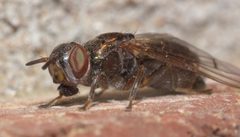
Senopterina foxleei is a of signal fly in the Platystomatidae, first described by Shewell in 1962. Signal flies are characterized by their distinctive wing patterns and involving wing signaling. The species is part of a distributed primarily in the Nearctic region. Observations suggest it is an active, fly often found in wooded or forested .
Pronunciation
How to pronounce Senopterina foxleei: //ˌsɛnɒptɪˈriːnə ˈfɒksliːaɪ//
These audio files are automatically generated. While they are not always 100% accurate, they are a good starting point.
Identification
Members of the Senopterina can be recognized by patterned wings with dark markings and a relatively robust body compared to other small flies. Specific identification of S. foxleei requires examination of male terminalia or detailed wing venation patterns, as external features overlap substantially with . The name honors Canadian entomologist N. A. Foxlee.
Images
Distribution
The is recorded from North America, with observations concentrated in Canada and the northern United States. GBIF records and iNaturalist observations indicate presence in forested regions of Ontario, Quebec, and adjacent U.S. states.
Seasonality
activity has been documented from late spring through summer, with peak observations in June and July based on available occurrence records.
Behavior
Signal flies in the Platystomatidae are known for elaborate wing-waving displays used in courtship and territorial interactions. While this is documented for the family, specific behavioral observations for S. foxleei are limited.
Similar Taxa
- Senopterina caeruleaOverlapping distribution and similar wing patterning; requires genitalic examination for reliable separation.
- Other Platystomatidae generaSignal flies in related such as Rivellia share wing-marking characteristics but differ in body proportions and structure.
More Details
Etymology
The specific epithet foxleei honors N. A. Foxlee, a Canadian entomologist who collected extensively in Ontario and contributed numerous specimens to Canadian insect collections.