Rivellia metallica
(Wulp, 1867)
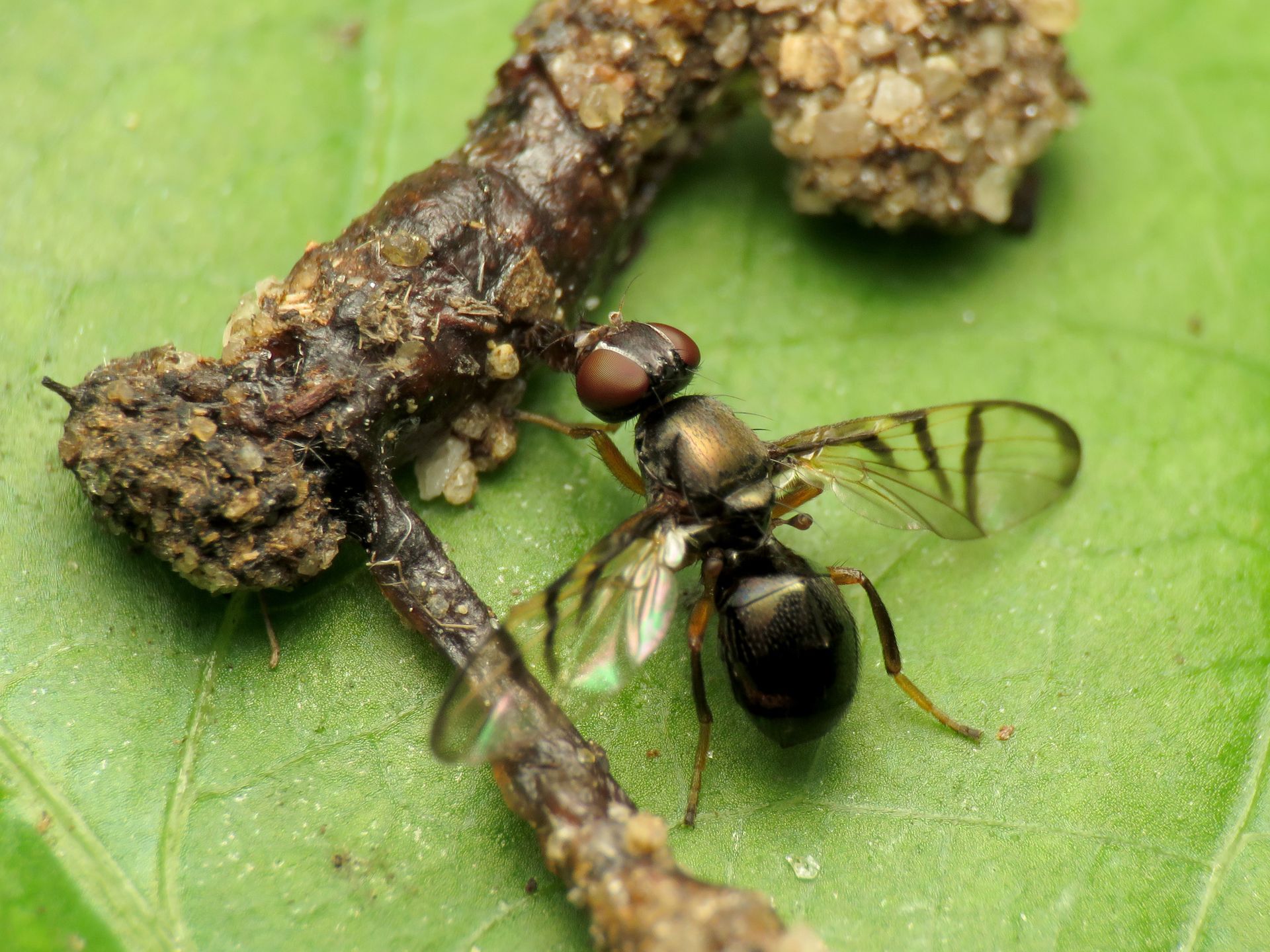
Rivellia metallica is a of signal fly in the Platystomatidae, first described by Wulp in 1867. Signal flies are recognized for their distinctive wing-waving , which serves intraspecific communication functions. The species epithet 'metallica' suggests a metallic appearance, though specific morphological details for this species remain poorly documented in available literature. Like other members of the Rivellia, it likely exhibits the family's characteristic 'signal' behavior involving patterned wing movements.
Pronunciation
How to pronounce Rivellia metallica: /rɪˈvɛliə məˈtælɪkə/
These audio files are automatically generated. While they are not always 100% accurate, they are a good starting point.
Identification
Definitive identification requires examination of male genitalia, as is standard for -level determination in Rivellia. Distinguished from by subtle morphological features not detailed in available sources. The metallic coloration implied by the species name may aid in field recognition, though this trait is shared with other Rivellia species.
Images
Appearance
Specific morphological description unavailable. As a member of Platystomatidae, likely possesses the 's characteristic tubular mouthparts that give a 'gas mask' appearance. The epithet 'metallica' suggests metallic coloration. Wing patterns typical of Rivellia are expected but not confirmed for this species.
Distribution
Distribution details not available in provided sources. As a member of Rivellia, likely occurs in regions where related are found, though this remains speculative.
Behavior
Expected to exhibit the characteristic 'signal' wing-waving of Platystomatidae, wherein wings are kept in constant motion during to produce -specific visual signals for mate recruitment. This behavior is -wide and has been explicitly documented in such as R. quadrifasciata.
Similar Taxa
- Rivellia quadrifasciataCongeneric signal fly with well-documented ; separation requires male genitalia examination as noted for generally
- Other Rivellia species-level morphological similarities necessitate detailed examination for -level identification
More Details
Nomenclatural note
described by Wulp in 1867; authorship properly cited as (Wulp, 1867)
Data limitations
Available sources provide only basic taxonomic information; detailed biological data appears absent from cited literature